Life in the public service has been anything but ordinary for civil servant Jansen Tham. In nine years, he has accumulated diverse experiences in the security sector that have challenged him to think on his feet, with barely a moment to catch his breath.
Fresh off a three-year posting at the Cyber Security Agency of Singapore (CSA), where he was assistant director at the Strategy and Planning division, Jansen has now stepped into a new role at the Ministry of Home Affairs (MHA), where he will grapple with the thorny issues of resource planning.
He tells us more below.
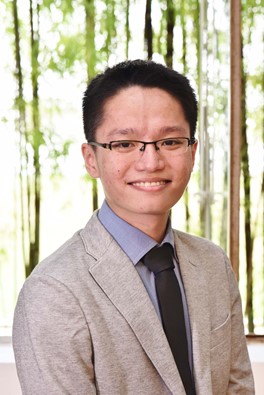
My public service career began at the MHA, where I looked after critical infrastructure protection and border security. I also did short operational stints at the Singapore Civil Defence Force and the Immigration and Checkpoints Authority. This gave me a holistic picture of safety and security in Singapore, which helped in my work to develop policies and operational structures for the Home Team.
After three years, I chose to study at the LKY School because I wanted formal training in policy development. I was particularly interested in international relations, and I had the chance to explore this with an exchange semester at the Johns Hopkins School of Advanced International Studies in Washington DC.
At the LKY School, one of my most valuable experiences was learning about the post-WWII security architecture in the Asia-Pacific, which set the stage for the current security situation in the region, and the US-China contestation we see today. Studying this in Singapore allowed me to better appreciate the implications of this security architecture to ASEAN, and specifically to Singapore. I probably would not have had this vantage point if I had taken my Masters in the US or UK.
But the best thing I’ve gained from the LKY School is my peers. No single person can develop and implement a policy, and we all need sounding boards to help sort out the kinks in our policy ideas. Having gone through the same training, my peers are the best people to help address the blind spots in my thinking, and point out errors in logic or judgement. Our network is a valuable asset to have, as we learn from each other and grow as leaders and policy practitioners.
A “Nebulous” Challenge
Towards the end of the course, a friend from an earlier posting recommended the CSA role to me. What drew me to the role was his explanation that cybersecurity is nebulous, and no one in the world has the right answers to ‘solve’ the problems of cybersecurity.
I was intrigued by this description, and cybersecurity ticked several of my boxes: I wanted a role that encompassed strategy development, international policy, and exposure to the digital realm. It turned out to be a good pivot, as it stretched my capacity to deep-dive into a difficult policy area that was new and constantly evolving, and where solutions were never static, since changes in the operating environment always required us to think out of the proverbial box.
Assistant Director, Ministry of Home Affairs & Cyber Security Agency of Singapore
Government Administration
To a layperson, I would explain my work in the CSA by drawing a comparison with drinkable water. In Singapore, our water is treated and filtered centrally, so that every household receives clean water by default. Likewise, CSA’s work entails trying to ensure that every household and user receives ‘clean’ Internet access, by removing malicious threats upstream as far as practicable (equivalent to filtering water upstream), while encouraging users to also practice good cyber hygiene (much like boiling your own water).
It is a tall order to do this in the digital domain, because unlike water—where you know the source—Internet traffic comes from all over the world. But it is essential, as cybersecurity is the root of trust in the digital domain. We invest in it to maintain public confidence in cyberspace, especially since it is becoming increasingly dominant in our day-to-day lives, driven by the Covid-19 pandemic.
Cybersecurity is a cat-and-mouse game, where we need to keep reviewing our policies to stay ahead of the bad guys. This alone has kept me fired up, as there is never a dull day at work. Someone who wants to join the cybersecurity industry must be willing to unlearn and relearn—even the most seasoned and experienced cyber professionals must do this. The bad guys are always thinking of new ways to target our data, identities, and assets. An effective cyber professional must recognise where old tools no longer address new threats, and develop innovative solutions to stay ahead of the curve.
New Year, New Posting
In Singapore, our water is treated and filtered centrally, so that every household receives clean water by default. Likewise, CSA’s work entails trying to ensure that every household and user receives ‘clean’ Internet access, by removing malicious threats upstream as far as practicable (equivalent to filtering water upstream), while encouraging users to also practice good cyber hygiene (much like boiling your own water)
Currently, I’m back at the MHA for my next posting in resource planning, where my team and I deal with manpower and budget constraints, given our ageing workforce and low birth rates, as well as the fiscal challenges in the aftermath of Covid-19.
This is a new area of work with novel challenges for me. Resource planning is fundamentally a zero-sum game—with the fixed and limited manpower and budget available, we must make do, and prioritising one work area or capability means deprioritising another.
Without increasing the resource pot, it is not easy to find a win-win solution. The trade-offs are stark and difficult because it is tough to determine what is more deserving of resources over another. Furthermore, needs and demands always increase faster than resources. Ultimately, we can only mitigate resource limitations by leveraging ‘force multipliers’ like technology, and increasing the productivity of our workforce.
But such challenges excite me, and make me want to go to work every day, just as I did with my cybersecurity role. And that is the beauty of public service work, which really involves thinking out of the box, exploring new solutions, and slaying sacred cows amid a rapidly changing policy environment.