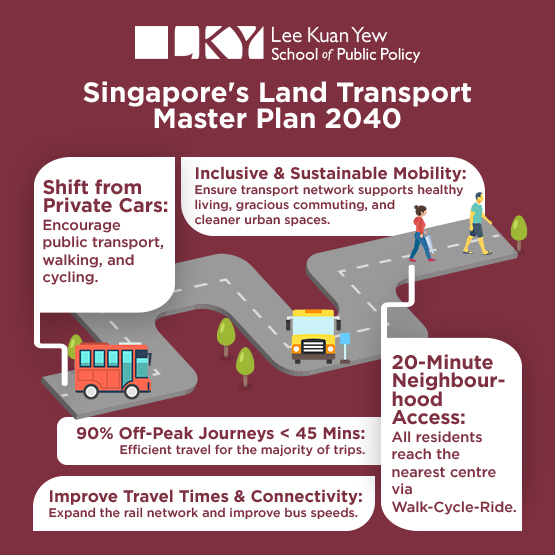
The aim is to move more people away from private cars and on to public transport, walking, and cycling — while improving travel times and freeing up public space. The target is for all residents to reach their nearest neighbourhood centre within 20 minutes using a Walk-Cycle-Ride approach, and for 90% of off-peak journeys to be completed in under 45 minutes.
“When thoughtfully implemented, traffic-calming helps reshape car-centric cities into healthier, more equitable urban environments,” Professor Bou Sleiman said. “By discouraging car dependence and promoting safer, more efficient streets, they support broader public goals such as sustainability, equity, and health.
“These measures reduce emissions, making cities cleaner and more breathable, while encouraging active transport and improving access for those who walk, cycle, or rely on public transit. This fosters a more inclusive city where everyone can afford to commute and stay active, contributing to better public health.”
AI-driven traffic management: A regional influence
In March, Phuket Governor Sophon Suwannarat said his city government is studying an AI traffic-management initiative modelled on similar systems developed in Singapore to manage severe congestion that was detracting from tourists’ enjoyment of the island. The Phuket system — which would be the first in Thailand — was anticipated to cut congestion by 30–40 per cent while enhancing safety by integrating with local emergency services.
The initiative comes amid a sharp increase in vehicle ownership nationwide. In Thailand, the number of registered vehicles surged from 34.6 million in 2013 to over 44.3 million in 2023, or an approximate 28 per cent increase over a decade. This exponential growth in vehicle volume has been a key driver of congestion in tourism hotspots like Phuket.
Professor Bou Sleiman sees great potential in real-time, data-driven solutions to improve traffic management.
AI-driven traffic signals, like those being studied by Phuket, can adapt to actual traffic flow or prioritise pedestrians and cyclists and offer a smarter way to calm traffic without simply banning cars. If the Phuket programme proves successful, it is thought similar projects could assist efforts to reduce traffic issues in Bangkok, a city notorious for its congestion.
“These developments could shift cities away from static traffic-calming designs toward more dynamic, responsive systems that adjust to people’s needs throughout the day,” she said. “New mobility solutions like modular autonomous shuttles — a new type of driverless public transport that can connect or detach modular units, adjusting capacity based on demand, also promise to make transportation more flexible, especially in areas poorly served by traditional transit.”
Balancing supply and demand in traffic regulation
Singapore’s Smart Mobility 2030 Master Plan highlights the move away from the days of simply building more infrastructure to accommodate more vehicles to now harnessing the power of big data and advances in analytics and connectivity to improve the management of existing infrastructure.
“Singapore is a leading example of a smart and efficient transportation policy,” Professor Bou Sleiman said. “Broadly speaking, there are two main levers to regulate congestion: managing supply by limiting the number of vehicles, and managing demand by influencing the cost of road usage.”
Singapore effectively does both, the professor observed. On the supply side, it controls the number of cars through a quota system, delivering a limited number of permits (COEs) each year. On the demand side, it uses dynamic congestion pricing, adjusting the cost of driving based on real-time traffic conditions.
These policies have helped stabilise the vehicle population despite rising affluence and urbanisation. The number of motor vehicles in Singapore remained relatively steady, going from around 972,000 total vehicles in 2014 to approximately one million in 2024, accounting for a 3.6 per cent increase, according to Land Transport Authority (LTA) data. This controlled growth contrasts sharply with high-density environments, like Thailand, where vehicle numbers have ballooned alongside economic growth and expanding infrastructure.
“These measures work in tandem to regulate road usage in a compact and densely populated city, allowing Singapore to avoid many of the chronic traffic issues seen in other global cities,” Professor Bou Sleiman said.
“Crucially, these policies are supported by a highly efficient, accessible, and government-subsidised public transport system, which ensures that residents have reliable alternatives to private car ownership. For cities like Bangkok, the key lesson is that demand and supply-side policies must go hand in hand, and that success depends on offering strong, affordable alternatives to driving.”
A holistic approach to urban mobility
Professor Bou Sleiman’s research has looked at whether simply removing roads might lead to better environmental outcomes for cities. The answer so far seems to be: it depends.
In a paper that earned the RIEF Best Paper Award 2023 and GIORGIO ROTA Best Paper Award 2023, she found that the closure of a major road in Paris in 2016 led to increased pollution as diverted drivers added to congestion on other roads. However, elsewhere, she has found that there may be cases where removing roads is beneficial both in terms of improving traffic flows but also assisting in decarbonisation.
“Traffic-calming strategies can unintentionally displace traffic and pollution from central, high-amenity areas to surrounding, often less affluent neighbourhoods, raising equity concerns,” she noted.
“They may also increase transport costs by making commutes longer and costlier, especially where public transit is limited.”
That latter point highlights that commuters are not very good at managing themselves and, if not provided with adequate alternative modes of transport, tend to choose the route that theoretically provides the quickest transit time while ignoring how that choice adversely affects the travel conditions of other; this behaviour is known in the literature as the "selfish Wardrop equilibrium".
“To mitigate these effects, cities should invest in accessible transit alternatives, monitor spillovers, and engage affected communities to ensure that the benefits of safer, cleaner and more breathable streets are shared more fairly.
“It is not just about moving cars, it is about moving people, shaping communities and making sure that enhanced mobility reaches all parts of the city, not just a privileged few.”