.png?sfvrsn=6a09040a_1)
In the Spotlight
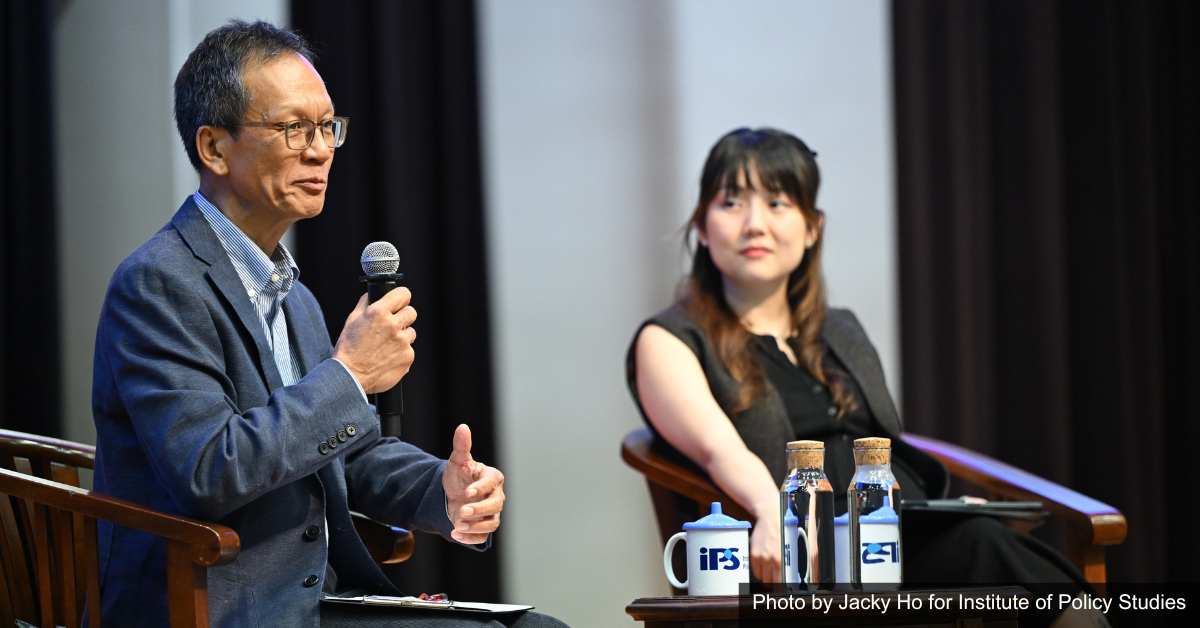
On 9 March 2026, Dr Shawn Lum, IPS’ 18th S R Nathan Fellow for the Study of Singapore, delivered his first lecture titled “Singapore, Biodiversity and a Thriving City”.
This is the first lecture of his three-part lecture series titled “Singapore, Nature and a World Reimagined”, as part of the IPS- Nathan Lecture series.
Dr Lum discussed how nature is managed in Singapore, including human–wildlife conflict, shifting baselines in public perceptions of nature, and the challenge of making nature accessible while remaining considerate of those less familiar with it.
The post-lecture Q&A session moderated by Ms Audrey Tan, Assistant News Editor at the Straits Times, discussed the economic value of nature, Singapore’s AI policies and their environmental impact and how residents can take greater ownership of their green spaces.
Learn more about his lecture series
here.
Recent Events
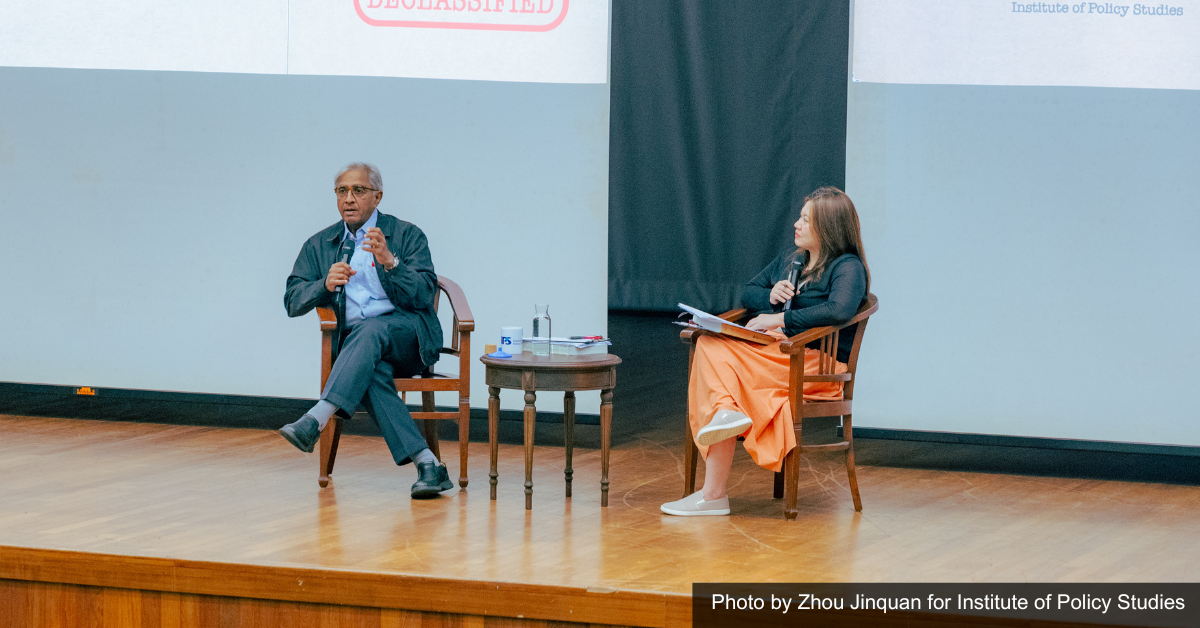 Sharing on The Albatross File by IPS Director Janadas Devan
On 6 March 2026, a sharing of The Albatross File: Inside Separation was held with the NUS Bukit Timah Campus community.
Drawing on published documents from Dr Goh Keng Swee, IPS Director Janadas Devan examined why Singapore initially sought merger, how political tensions and racial unrest led to its breakdown, and the negotiations that resulted in separation.
The session also highlighted how these documents and oral histories from founding leaders reveal the fears and calculations behind Singapore’s independence. A Q&A moderated by IPS’ Dr Laurel Teo discussed the continued relevance of these lessons for Singapore today.
Recent Publications
 |
IPS Working Papers No. 71 — Unified AI Literacy Framework for Singapore
By Chew Han Ei, Carol Soon and Harkiran Kaur
AI literacy is now a national priority. In the 2026 Budget, Prime Minister Lawrence Wong announced the new National AI Council and stronger efforts to build AI capabilities across education and SkillsFuture pathways. In this working paper, IPS researchers propose a unified AI literacy framework that goes beyond technical skills to include digital competencies and contextual judgement. |
 |
IPS Working Papers No. 72 — Measuring Digital Trust: An Empirical Framework for Institutional Trust
By Chew Han Ei, Carol Soon, Kam Tai Tong, Harkiran Kaur and Chin Shuen Lin
This working paper proposes an empirical framework to assess institutional trust in digital systems. Drawing on a nationally representative survey, the study finds that cybersecurity, fairness, transparency, reliability, redressability, and digital literacy are key drivers of public trust in digital governance.
|
Articles
 |  |
Commentary — To win the AI adoption race, Singapore must mind the social class and gender gaps
(The Straits Times)
By Laurel Teo
• 7-min read 84 per cent of degree holders in Singapore use AI chatbots, compared with just 31 per cent of those with secondary education or below. As Singapore pushes to become an AI hub, the challenge is ensuring no groups are left behind. Addressing gaps in social capital, time, confidence and gender participation will be key to inclusive AI adoption. | Commentary — Anxious about AI, I went back to school and this is what I learned / 一名中年经理的AI求学之路
(CNA and Lianhe Zaobao)
By Liang Kaixin
• 7-min read Budget 2026 has firmly placed AI on the national agenda. This commentary argues that while many mid-career workers are anxious about job disruptions, meaningful upskilling requires stronger support for postgraduate programmes. The piece is also available in Chinese on Lianhe Zaobao. |
 |  |
Commentary — Budget 2026 – why CDC vouchers are still given in a time of economic recovery
(CNA)
By Clara Lee
• 5-min read Budget 2026 brings another round of CDC vouchers for households. This piece explains why such support remains necessary despite slowing inflation and economic recovery, and how it reflects the need for calibrated measures to bridge the gap between improving economic indicators and the financial pressures many Singaporeans still face. | Commentary — New Flight plan for CPF savings: Long overdue, but may not suit everyone
(The Straits Times)
By Christopher Gee
• 5-min read Budget 2026 announced a new CPF investment scheme to be introduced by 2028, aimed at members who are willing to take on higher risks for potentially higher returns. This piece explains how it could could provide a simpler alternative to the current CPF Investment Scheme but should be paired with proper financial guidance and a holistic assessment of members’ financial circumstances. |
 |  |
Commentary — Will an endowment of $300,000 per child move the needle?
(The Straits Times)
By Kalpana Vignehsa
• 7-min read While the Budget has strengthened support for raising children, Singapore’s family policies still overlook a key deterrent: the long-term income and career penalties of caregiving, especially for mothers. The piece argues that the next step is supporting family formation through bold policy ideas that better recognise caregiving as essential work. | Commentary — The way we define success makes it hard to raise children in Singapore
(The Straits Times)
By Tan Poh Lin and Vincent Chua
• 7-min read As Singapore’s TFR falls to a new low of 0.87, this piece argues that low fertility reflects not only costs and support gaps, but a highly competitive society. They suggest redefining success beyond narrow academic and material achievements to make parenthood feel less risky and more fulfilling. |
 | Commentary — A Digital Exchange for Time and Care to Strengthen Singaporean Families and Community
(IPS Commons)
By Fung Mei Lin and Gillian Koh
• 7-min read This piece highlights that many caregivers, especially women, face a “poverty of time”. The authors propose a national digital timebank that enables people to exchange caregiving and community support, helping strengthen families, revive the “kampong” spirit and build a more resilient society. |
| | |