.png?sfvrsn=6a8b0a0a_1)
In the Spotlight
.png?sfvrsn=eb8a0a0a_1)
On 5 June 2026, the Institute of Policy Studies hosted a dialogue on Singapore and its response to the 2026 Iran War across two critical fronts.
The first session focused on energy security and economic resilience, where Dr Tan See Leng, Minister for Manpower and Minister-in-charge of Energy and Science & Technology at the Ministry of Trade and Industry, joined Mr Vikram Khanna, Economics Commentator at The Straits Times, to explore Singapore’s energy options and long-term economic strategy amid a volatile global landscape.
The second session examined national resilience, with Mr K Shanmugam, Coordinating Minister for National Security and Minister for Home Affairs, addressing challenges posed by economic fragmentation, AI’s rapid evolution and shifting power structures. The session was moderated by Ms Selena Ling, Chief Economist and Head of OCBC Group Research at OCBC.
Learn more about the dialogue
here.
Recent Events
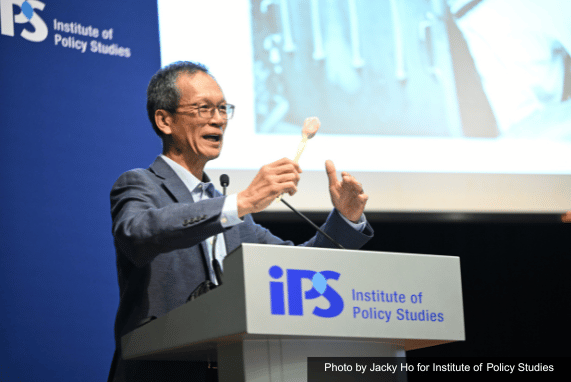 | IPS-Nathan Lectures by Dr Shawn Lum — Lecture II: Singapore, Nature and Singaporeans The lecture explored the social dimension of nature, biodiversity and conservation. He argued that nature should be valued not only in economic terms, but also for its social and cultural benefits, and proposed that policy can help cultivate care for nature.
Moderated by Associate Professor Teo You Yenn, the Q&A covered topics ranging from climate anxiety to the role of education in Singapore in helping students experience nature and develop stewardship.
Lecture III, Singapore, Nature and the Wider World will be held on 16 June 2026. Click here to sign up. |
Recent Publications
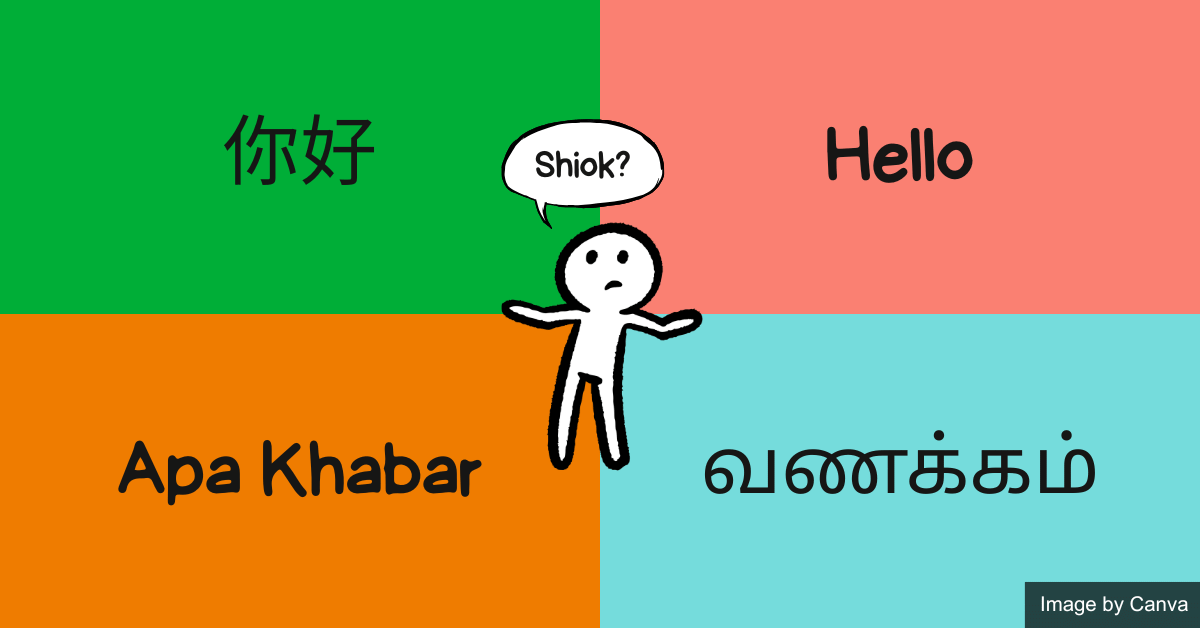 |
IPS Working Papers No. 74 — Language Identity & Management in Singapore: Updated Findings from the IPS Survey on Race, Religion and Language
By Mathew Mathews, Melvin Tay, Teo Kay Key and Lim Hwee Ting Based on a survey of 4,000 residents, this working paper examines language proficiency, use, attitudes towards Singlish, language and identity, policy perceptions, and motivations for speaking English well. It found that Singaporeans are more comfortable with English and Singlish than before, with Singlish gaining acceptance and becoming a stronger identity marker. Mother Tongue self-reported proficiency remains broadly stable, but views of standards are mixed. |
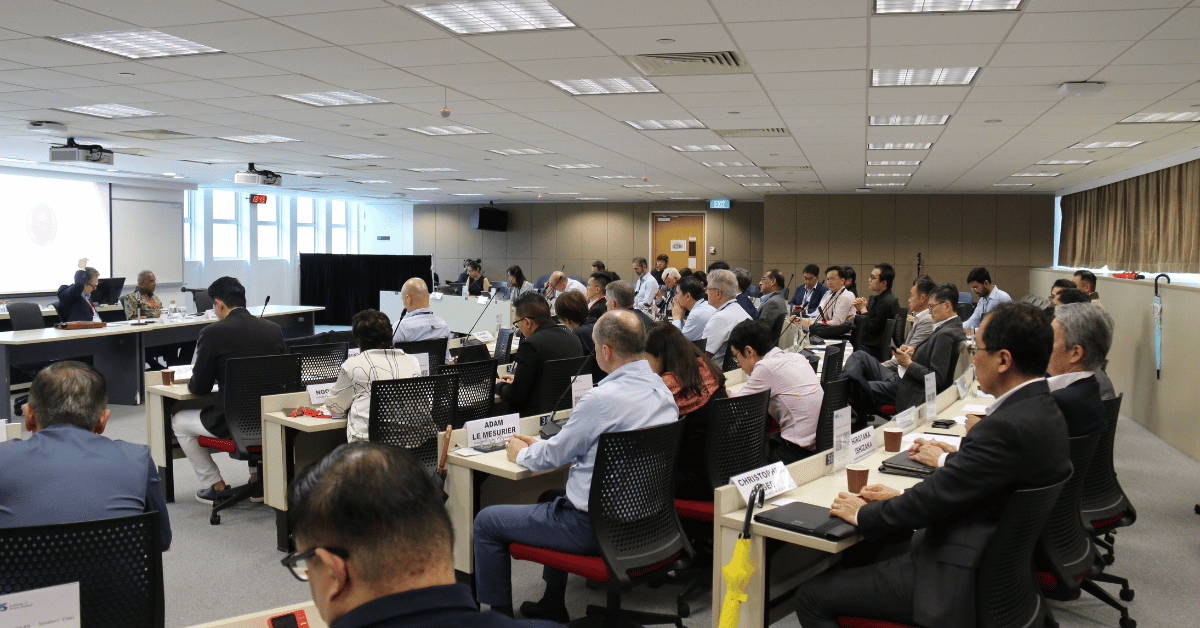 |
By Cassandra Ho Jing Jing
On 15 May 2026, IPS held the 44th Singapore Economic Roundtable (SER), bringing together economists, academics, policymakers, and business leaders. The event featured two discussions: one on Singapore’s macroeconomic outlook amid geopolitical and economic shifts, and another on digital trade and the ASEAN Digital Economy Framework, with speakers from government, academia, and industry.
|
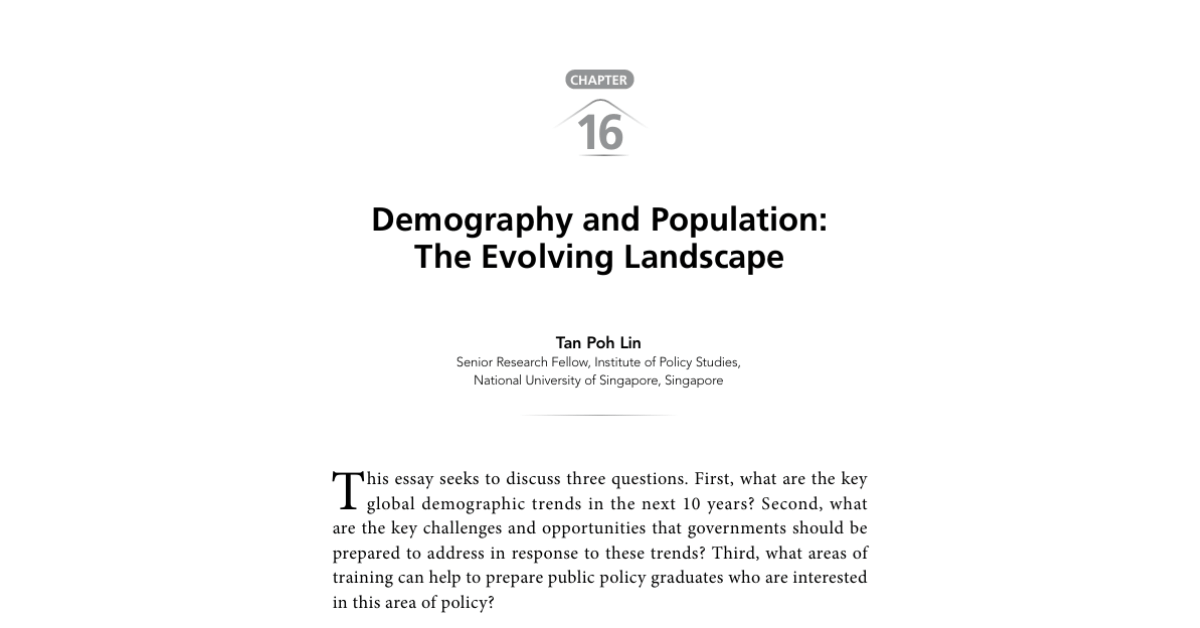 |
By Tan Poh Lin
This chapter featured in Lee Kuan Yew School of Public Policy's book "Public Policy Schools of the Future" examines global demographic trends over the next decade: declining fertility, population ageing, and widening gender gaps in family formation. It also outlines policy responses and training areas for public policy graduates.
|

|
By Mathew Mathews
This chapter in “Public Policy Schools of the Future” makes the case for opinion research centres in public policy schools, highlighting their role in producing rigorous, representative data for policymakers and citizens. It also examines how emerging technologies like AI, VR, and biometrics will shape the future of public opinion research. |
 | | By Shane Pereira and Elvin Xing (CNA) • 6-min read
This commentary explore the rise of “silicon sampling”, in which AI is used to simulate public opinion. While cheaper and faster, AI cannot fully reflect real emotions or lived experience. Used responsibly as a support tool, it could improve policymaking without replacing meaningful human engagement. | By Wilson Goh and Wong Kang Li (The Straits Times) • 8-min read
Singapore’s income inequality has reached to its lowest level in decades, but wealth remains concentrated at the top. This commentary argues for “shared capitalism” to give workers a greater stake in business growth, building on CPF savings and home equity to create a nation of co-owners. |
|