
In the Spotlight
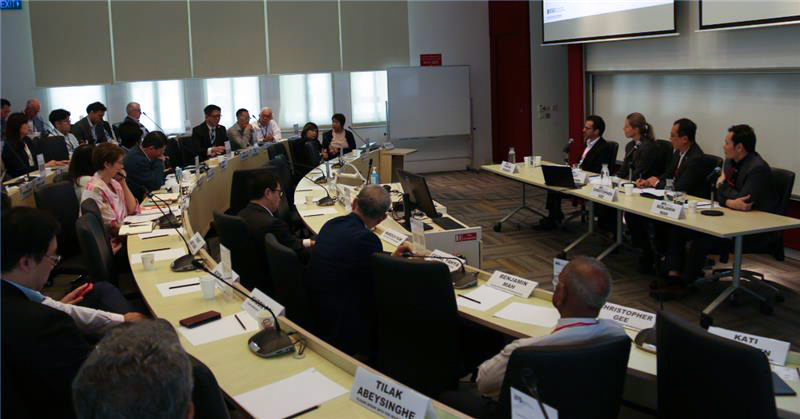
On 18 November 2025, IPS held the 43rd Singapore Economic Roundtable (SER), bringing together economists, academics, and business leaders from both public and private sectors. The event comprised two sessions. The first focused on Singapore’s macroeconomic outlook and policy implications amid global trade tensions, with speakers from the Monetary Authority of Singapore and BNY Investment Institute. The session was moderated by IPS Adjunct Senior Research Fellow Manu Bhaskaran. The second examined the impact of artificial intelligence (AI) on the economy, featuring speakers from Nextrade Group, Mastercard, and SGTech, and was moderated by IPS' Christopher Gee.
Read the report here.
Announcements
Crossing Cultural Bridges Workshop by IPS RRIC
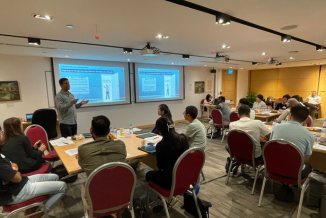
| In today’s diverse work environments, understanding how to collaborate across cultures and nationalities is essential. The Crossing Cultural Bridges workshop by the Institute of Policy Studies’ Programme on Race, Religion and Intergroup Cohesion equips teams with practical strategies to build inclusion, enhance cultural intelligence, and navigate sensitive intercultural situations with confidence. Through evidence-based insights and interactive activities, participants gain deeper awareness of their own unconscious biases and skills to excel in a global team. Thanks to support from the National Integration Council, this programme is heavily subsidised — up to 80% off for a limited time only. Organisations can sign up now to bring this workshop to their staff and strengthen a more inclusive workplace culture. Email decb64_aXBzLnJyaWNAbnVzLmVkdS5zZw==_decb64 to register or find out more. |
Articles
 |  |
Commentary — Harmless fun? People are using Sora to create problematic videos
(The Straits Times)
By Elvin Xing and Sophy Tio
• 7-min read Generative video tools like OpenAI’s Sora 2 are changing how users create and consume content, but also enabling harmful, hyper-realistic videos that reinforce stereotypes. This commentary highlights the need for stronger digital literacy and positive intergroup interactions to counter these risks and protect social cohesion. | Commentary — 与60年前新加坡的一场对话——《信天翁档案》提出的问与答
(Lianhe Zaobao)
By Teo Kay Key
• 5-min read The publication of The Albatross File invites a re-examination of the political choices made during Singapore’s founding and brings questions of national identity into focus. This commentary reflects on the uncertainties and judgements that shaped Singapore’s path to independence, arguing that Singaporean identity, though firmly rooted, remains an evolving project shaped by each generation. |
 | Commentary — Navigating the New Global Trade Order: What Singapore and Asean firms must do
(IPS Commons)
By Faizal Yahya and Soo Yeon Kim
• 6-min read Amid rising protectionism and global uncertainty, Southeast Asia’s free trade agreements are vital stabilisers of trade. However, uneven utilisation across ASEAN reflects gaps in awareness and capacity among firms, underscoring the need for stronger, more coordinated systemic support by government bodies and industry associations to better translate trade policy into meaningful firm-level outcomes.
|
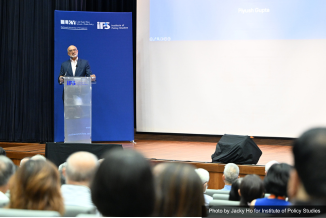 |  |
Event Summary — 17th IPS-Nathan Lecture Series: Lecture I: “Balancing Stability, Trust and Innovation” by Mr Piyush Gupta
(IPS Commons)
• 6-min read Singapore’s rise as an “unlikely” global financial centre was the focus of Mr Piyush Gupta’s first lecture in his IPS-Nathan Lecture Series. He traced the sector’s evolution from the Asian Dollar Market to today’s S$6 trillion asset-management hub, highlighting bold policy choices, close public–private collaboration and a careful balance of stability, trust and innovation. As finance undergoes another major transformation, he argued that Singapore’s agility and strong regulatory–industry trust will be key to sustaining its edge.
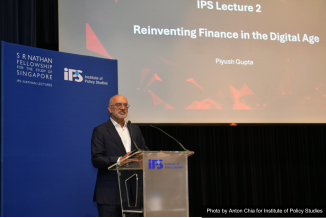
| Event Summary — 17th IPS-Nathan Lecture Series: Lecture II " Reinventing Finance in the Digital Age" by Mr Piyush Gupta
(IPS Commons)
• 9-min read In his second IPS-Nathan Lecture, Mr Piyush Gupta examined how digitalisation is reshaping finance in Singapore, from payments and platforms to new players and shared infrastructure. While digital finance has delivered efficiency, inclusion and innovation, it has also introduced new risks — from scams and cyber threats to liquidity shocks. He argued that Singapore’s challenge is to sustain innovation while safeguarding trust, stability and inclusion.
|
Recent Releases on IPS Website
|
Singapore Unpacked Episode 9 — Workplace fairness: Tackling unconscious biases In this episode of Singapore Unpacked, host Liang Kaixin speaks with IPS researcher Sophy Tio and Lepak Conversations’ Yulianna Frederika on unconscious bias in Singaporean workplaces. They discuss how casual, often unintentional racism affects hiring, promotions, and team culture, and highlight the role of leadership, allyship, and organisational practices in fostering inclusion. The episode also explores how AI and thoughtful DEI strategies can help address biases and build psychologically safe and fair workplaces. |

|
Report — Understanding Youth Mental Health in Singapore: Insights into Help-Seeking and Self-Diagnosis Through a Professional Lens Mental health is increasingly a national priority in Singapore, especially as more young people face psychological challenges. This report by IPS News Fellow, Sugimura Akane explores how youths seek support, including the role of self-diagnosis and social media exposure. Interviews with mental health professionals reveal five key themes — from the pandemic’s impact to socioeconomic barriers — and highlight the need to recognise youths as active agents. Akane calls for a shift from awareness to empathy in building a compassionate, resilient mental health ecosystem. |
Recent Publications
IPS Working Papers No. 69 — Perceptions of and Challenges to Singaporean-ness: Key Findings from the IPS-CNA Survey on National Identity
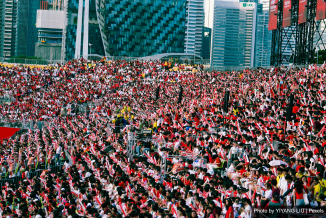 | This working paper presents findings from the Study on National Identity in Singapore, a nationally representative survey of 2,000 residents conducted with CNA. The study offers a nuanced picture of how Singaporeans define identity today — highlighting strong feelings of unity and belonging, shifting perceptions shaped by social and economic change, and ongoing challenges such as socioeconomic divides and differing views on newcomers. |
IPS Exchange Series No. 31 — Future(s) of Language Use and Policy in Singapore
 | This paper identifies six key drivers shaping language use and policy in Singapore, ranging from shifts towards English and growing acceptance of Singlish, to demographic, aspirational, technological and geopolitical changes. Drawing on horizon scanning, expert consultations and stakeholder discussions, it examines how language, identity and socioeconomic factors intersect, offering a framework to explore possible futures and inform adaptive policy responses. |
Journal Article — The Stickiness of Meritocratic Beliefs From Adolescence to Adulthood in Singapore
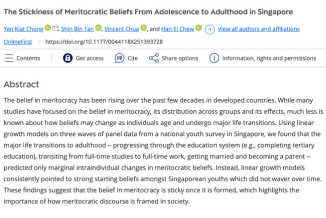 | Belief in meritocracy has been rising in developed societies, yet little is known about how it changes over time. This study finds that major life transitions have only marginal effects on such beliefs, which are formed early and remain remarkably stable — highlighting the importance of broadening visible pathways to success early in life. |