It has been more than three years since the launch of the War on Drugs in the Philippines. This is President Rodrigo Duterte's flagship policy – a campaign promise to wage an all-out war against illegal drugs and criminality. The implementation of the crackdown on drugs has led to an official body count of 5,500 drug-related deaths – according to the Philippine National Police (PNP), the country's law enforcement agency and lead enforcement agency of the policy. But international human rights organisations estimate up to 27,000 alleged extrajudicial killings from July 2016 to the present day. As of March 2019, the PNP also reported at least 29,000 cases of killings are classified as deaths under inquiry (DUI) nationwide.
Despite criticism from the international community and local opposition, Duterte continues to enjoy massive support. His approval ratings remain high, with 80% in June 2019, 78% in September 2019, and 82% in December 2019. Another survey conducted in June 2019 reports that 82% of Filipinos are satisfied with the Duterte Administration's campaign against illegal drugs. His persistent popularity is further proven by the landslide victory of his political party's senatorial slate during the country's midterm elections in May 2019. While this human rights crisis persists, media and public attention has significantly waned. Filipinos seem to have generally accepted the situation and its ill effects.
The drug war in the Philippines is a State-perpetrated conflict. As such, in order to comprehensively analyse it, the United Nation’s Conflict Development Analysis (CDA) was used. CDA takes into account the following aspects: 1) Situation Analysis; 2) Factor Assessment; 3) Stakeholder Analysis; and 4) Conflict Dynamics and Drivers of Change. For the full analysis, read the case study, Protecting Human Rights amidst the Philippine War on Drugs.
Was there a drug crisis?
Prior to Duterte's war, the actual number of drug users in the Philippines had already been falling. The estimated number of drug users was at 6.7 million in 2004, 1.7 million in 2008, and 1.3 million in 2013. This downward trend can be attributed to effective supply reduction and other drug testing efforts conducted by both the Philippine Drug Enforcement Agency (PDEA) and the Dangerous Drugs Board (DDB). However, when DDB Chairman Benjamin Reyes released results that fell way below President Duterte's claims of the country having 3 or 4 million drug addicts, he was fired immediately.
Enabling factors, root causes and consequences
The drug trade in the country is a symptom of much deeper economic problems. Being part of the drug trade serves as a means of livelihood for some poor Filipinos. However, the pervasiveness of the campaign against drugs has also created a narrative that has instilled fear against drug users. Filipino families perceive drug addicts as a security risk rather than individuals who may need healthcare and rehabilitation. In Metro Manila alone, 82% of families in 2016 feared drug addicts —a 17.3 percentage point jump from 64.8% in 2015. This has been effective in maintaining support for the drug war despite widespread extrajudicial killings of poor Filipinos, allegations of police-sanctioned vigilante killings, and the recent resignation of the law enforcement chief due to alleged drug ties.
In addition to President Duterte's public popularity, he also possesses a political supermajority in the House of Representatives, the Senate, and the Supreme Court. All these factors have allowed the crisis to persist without significant opposition. After the 2019 national elections resulted in a landslide victory for Duterte's senatorial slate, opposition to his Administration and to his flagship policy further dwindled. Even news reports and discussions regarding this issue have dwindled over the past 3 years. Figure 1 below highlights significant elements of the conflict, which are detailed in the case study.
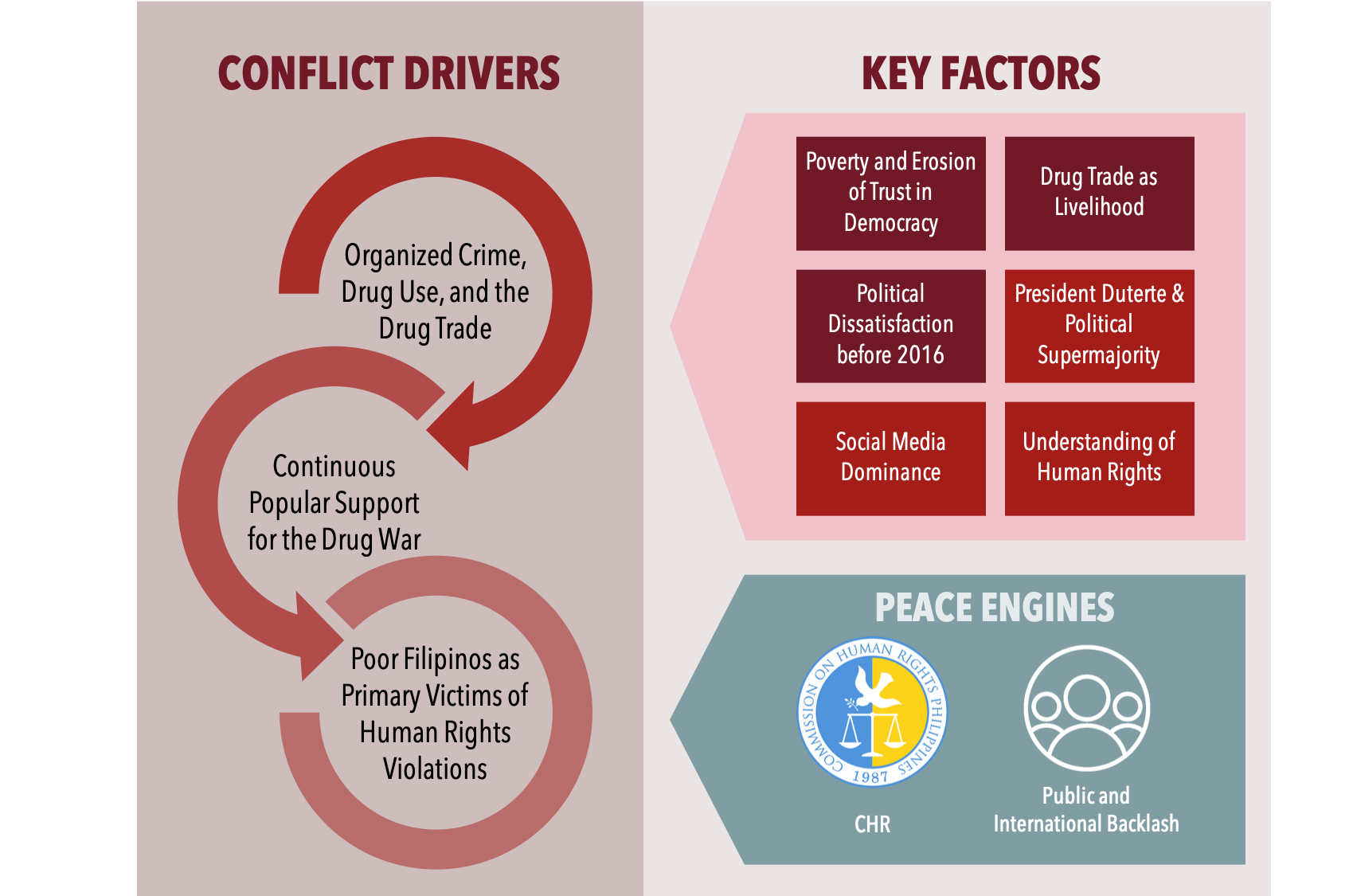
Figure 1. Conflict Drivers, Key Factors, and Peace Engines in the Philippine War on Drugs
The most significant stakeholders in the War on Drugs are the victims of the human rights violations and their families – the accurate number of which remains unsettled. Reports from human rights organisations looking closely into the conflict have pointed out that the policy overwhelmingly targets urban poor Filipinos, who in turn are nearly without means to obtain justice. Ironically, they are also the sector of Philippine society who are perpetual victims of social and economic inequities, to whom Duterte's campaign promises appealed to the most. These poor families will likely be further entrenched in poverty due to the loss of their breadwinners.
Is change on the horizon?
One potential peace agent is the Commission on Human Rights (CHR) because it is a constitutionally-established body mandated to promote human rights protection in the country. However, the institution has faced political resistance in the performance of its functions. Aside from the deliberate lack of cooperation with CHR by law enforcement agencies involved in the drug war, a Duterte-led House of Representatives also threatened to give the institution a $20 USD annual budget for being critical of the drug operations in 2017.
A recent revival of the issue on mainstream media was Vice President (VP) Leni Robredo's acceptance of the co-chairperson position of the Inter-Agency Committee on Anti-Illegal Drugs (ICAD) – an appointment issued by the President as a dare. VP Robredo is often seen as the leader of the opposition, hence the controversy that followed the appointment on November 6, 2019. During her short stint, she emphasised the need for accurate data on drug war casualties, a focus on high-value targets, and rehabilitation efforts. She was immediately removed from her position after a 19-day stint. However, she released a report on January 11, 2020 identifying significant gaps in the drug war's effectiveness. Figure 2 below is an excerpt of the report's executive summary.
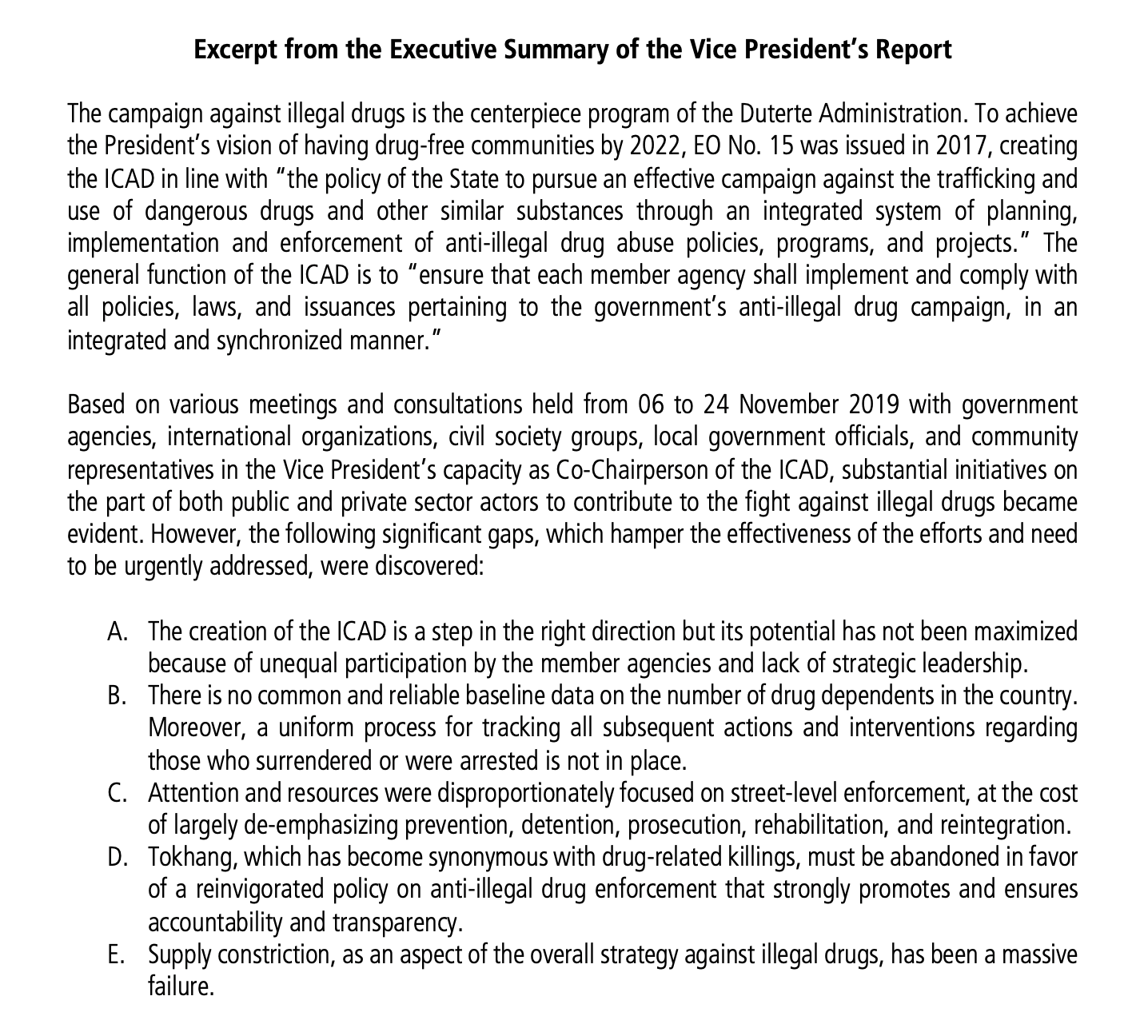
Figure 2. Excerpt from the Vice President’s Report as Co-Chairperson of the Inter-Agency Committee on Anti-Illegal Drugs
The government has largely dismissed the VP's findings, saying that she lacks the competence and credibility to assess the drug war. Even after the recent release of the report, further news regarding the ongoing human rights crisis has been scarce. While the drug war continues, it is evident that there is less and less attention being paid.
For more public policy case studies from the Lee Kuan Yew School of Public Policy, visit https://lkyspp.nus.edu.sg/research/case-studies/all-case-studies.