The rule of law in Hong Kong is key to the city’s economic success.
The Basic Law of Hong Kong underpins a high degree of autonomy, which grants the city with executive, legislative and independent judicial power. Its judicial independence guarantees a level playing field for local and foreign businesses and at the same time, protects people’s rights and freedoms.
Many firms choose to invest in Hong Kong because of its ties to mainland China, as well as its legal and regulatory system and business-friendly environment. Nonetheless, the recent proposed extradition law amendments have arisen intense public discontent and international community concern.
The Necessity of Amending the Extradition Bill?
According to the Government, the decision to amend the existing extradition bill stemmed from the recent Chan Tong-kai homicide case.
Since the existing extradition agreement does not cover “any other part of the People’s Republic of China” (China, Taiwan and Macau), there is an urgency to plug the existing legal loophole so that the alleged suspect can be extradited to Taiwan for a murder trial.
The “legal loophole” argument has been used repeatedly to explain the necessity and urgency of amending the extradition bill.
Malcolm Rifkind, former UK Foreign Secretary responsible for Hong Kong’s final stage of negotiations with China, explained that a loophole suggests negligence on the side of the draftsmen and the Legislative Council.
The geographically limitation of the current extradition agreement, in reality, is purposefully placed to ensure the existence of a clear divide, especially between Hong Kong and China as the legal systems of the two jurisdictions are vastly different.
Plugging the “loophole”, therefore, would run the risk of extraditing people to a legal system which has been criticised for its inadequacies in adhering to international human rights convention.
The concern is shared by the Court of New Zealand which blocked an extradition to China upon considering the Chinese judiciary's questionable independence from political control, and past violations international human rights conventions.
Other than the Chan Tong-kai case, the government is also of the view that Hong Kong is internationally obliged to ensure that the city does not turn into a safe haven for “fugitives”.
According to the Bar Association in Hong Kong, under international law, states are not legally obliged to “surrender an individual or provide legal assistance” unless an extradition treaty is in place.
Hence, it appears that the amendment is not made to serve the imagined legal responsibility which comes from the global community, but rather, it is urgently rushed to serve China which continuously point out that there are at least 300 fugitives on the run in Hong Kong who have committed fraud and other white-collar crimes in China.
Apart from rebutting the original purpose of the extradition bill, the public has also voiced fear over the charges which could lead to extradition.
Upon consecutive protests on 31 March 2019, 28 April 2019, and the lawyers' silent march on 6 June 2019, the government has amended the bill to alleviate certain concerns.
These concerns include deducting the number of extraditable charges from 47 to 37, raising the threshold for offences which warrant jail terms from one to seven years, and ensuring that all additional safeguards would resemble International standards and the ICCPR (International Covenant on Civil & Political Rights).
Despite these additional safeguards, citizens and pan-democrats still took to the streets to demand the complete withdrawal of the extradition bill.
Time and again, protesters have expressed that safeguards are insufficient to protect them from being charged for political reasons.
Such concerns are not unfounded as recent cases show that oppositions in mainland China have been charged for crimes which are non-political in nature, such as tax evasion, gathering a crowd to disturb public order, or simply, being held without trial or charges.
Maintaining Judicial Independence in Hong Kong
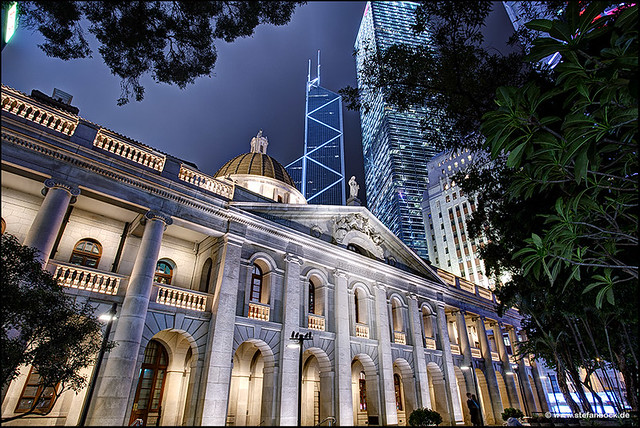
The Court of Final Appeal Building in Hong Kong. Photo: Stefan Block
As stated in the Preamble of the Basic Law of Hong Kong, “under the principle of ‘one country, two systems’, the socialist system and policies will not be practised in Hong Kong”.
Such decision is based on the consideration of Hong Kong’s history and realities, and is set to uphold national unity and territorial integrity and to maintain Hong Kong’s prosperity and stability.
Hong Kong, as an inseparable territory of China, practices its previous capitalist system and way of life for at least 50 years since the handover in 1997. Nonetheless, both local and foreign agencies show increasing concerns over Beijing’s violation of its commitment to autonomous local governance.
The series of extradition bill demonstrations is a mixture of fear and distrust. They point to both the incapability of Lam’s government to safeguard autonomous governance and the lack of judicial protection of human rights in China.
Amidst fear and frustration, Hong Kong citizens peacefully took to the streets on 9 June 2019 to defend the city’s judicial independence in a rational and non-violent manner.
As stated in Article 27 of the Basic Law, “Hong Kong residents shall have freedom of speech, of the press and of publication; freedom of association, of assembly, of procession and of demonstration; and the right and freedom to form and join trade unions, and to strike”.
But skeptical analysts thought the June 9 family-friendly march had not been enough to send a message. The government immediately issued a statement on the same night that it had no intention of withdrawing the contentious legislation, albeit hundreds of thousands of people demonstrating against the proposal.
Meanwhile, Chinese Vice Premier Han Zheng and Foreign Ministry Spokesperson Geng Shuang endorsed firm support from the Central Government to amend the law. It is the first time since 1997 that two members of the Central Committee have spoken out on a Hong Kong issue.
Over and above, the chaos erupted between pro-establishment and pan-democratic lawmakers as they held separate but simultaneous meetings in the Legislative Council, together with the unnecessarily rush decision to pass the bill without proper, comprehensive consultation, led to massive discontent among Hong Kong citizens.
Not until the outbreak of another demonstration on 12 June 2019 had the government recognised the public procession was a result of insufficient and ineffective communication work, and finally announced on 15 June 2019 a suspension to the amendment.
On 16 June 2019, Chief Executive Mrs. Carrie Lam apologised for causing disappointment and grief among the people and said she clearly heard the views expressed in a peaceful and rational manner.
Under the principle of “one country, two systems”, Hong Kong government shall commit to unwaveringly safeguard national sovereignty, and at the same time, firmly preserve Hong Kong’s constitutionally entrenched judicial independence.
This is to ensure Hong Kong’s service as a bridge between China and the rest of the World. Whilst some criticize Hong Kong is fading towards economic irrelevance, it is essential to understand what make Hong Kong economically relevant and distinctive: a service-oriented, globalised investment environment, protected by fair, transparent courts that enforce long-established rule of law.
Given the aforementioned well-established legal framework, Hong Kong has been serving as a major legal and dispute resolution service hub in the region.
To support mainland China’s “Belt and Road” Initiative, Hong Kong recognises its own strategic role in facilitating cross-border investments and China’s international trade.
While there is continued growth of trade globalisation and the expansion of the Initiative, there are rises of legal disputes given the complicated trade structures and commercial rules, as well as differences in legal systems.
Hong Kong, as the only common law jurisdiction in China under the protection of the Basic Law, is undoubtedly the ideal, neutral and reliable location to conduct arbitration for commercial disputes.
Thus and so, strict maintenance of judicial independence is of fundamental importance to Hong Kong, as a backbone to support China’s further opening up and enhanced protection of intellectual property and rule of law.
The Debate on Foreign Influence
As a judicially independent capitalist city, Hong Kong has established close ties with many foreign countries over the years, and presents herself as an international financial hub, a “safe haven” which protects businesses and attracts talents from all over the world.
As such, the extradition bill affects not only the interests of Hong Kong citizens, but foreign businesses and talents with roots in the city.
Many in the international community have expressed concerns over the potentially far-reaching consequences of the bill for Hong Kong and its people, as well as for business confidence in Hong Kong.
In the U.S. China Economic and Security Review Commission’s Brief on the Extradition Bill, the key findings have succinctly pointed out that if the bill is passed into law, it would only lead to continuous political coercion from Beijing, erosion of the autonomy and guaranteed freedom of Hong Kong, and the endangerment of security and economic interests of foreign businesses and nationals in the city.
These concerns further prove that Hong Kong has an important commercial presence in Asia and long-standing business alliances with the rest of the World.
The controversial bill has altogether triggered four demonstrations and protests, each attracting more concerned citizens than the other.
Past protests show that concerns not only come from activists, legal professionals and human rights groups, but also from youth who worry about their future, mothers who want to protect their children, teachers who wish to educate the future generations, and religious leaders who want nothing but peace and love restored.
They are all united by one simple drive - the drive to protect, with love and care, the integrity of the “one country, two systems” principle.
Looking forward, as Mrs. Carrie Lam mentioned on the first day of her inauguration, while Hong Kong’s problems could not be resolved overnight, she would strive towards a new style of governance to communicate with citizens and restore public trust and social harmony.
To heal a divided city, Hong Kong citizens shall continue to preserve the spirit of Hong Kong and the core values of mutual respect, harmony and diversity. These can only be done by strengthening communications between government and society, among different parties, and by enhancing exchanges with the mainland authorities.
Picture Credit: Studio Incendo
If you would like to read another perspective on this issue, kindly visit here.
If you’re interested in reading such content, subscribe here.