
In The Spotlight
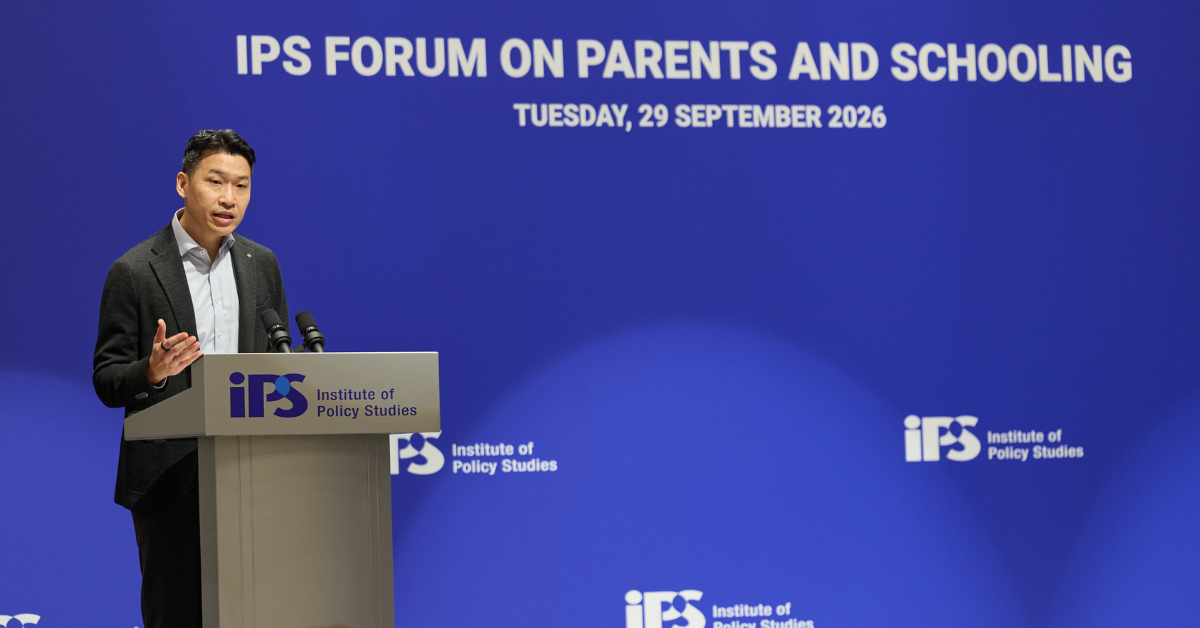
On 29 September 2026, the Institute of Policy Studies held the IPS Forum on Parents and Schooling, bringing together parents, educators, researchers, policymakers and community stakeholders to reflect on how aspirations and attitudes towards education have evolved over the past decade.
IPS’ latest survey on Singapore's education system found that parents increasingly value character, social-emotional development and learning from failure, even as academic concerns remain salient. Parental stress has also risen, alongside substantial spending on tuition and enrichment; highlighting the tension between broader aspirations for children and the continued stakes attached to educational outcomes.
The forum explored how parents, schools and society can better manage these competing pressures, strengthen confidence in multiple pathways and give children room to develop different strengths. In his closing remarks, Mr David Neo, Minister for Culture, Community and Youth and Second Minister for Education, emphasised the need to build confidence in many paths to success.
Learn more about the forum and read the event report here.
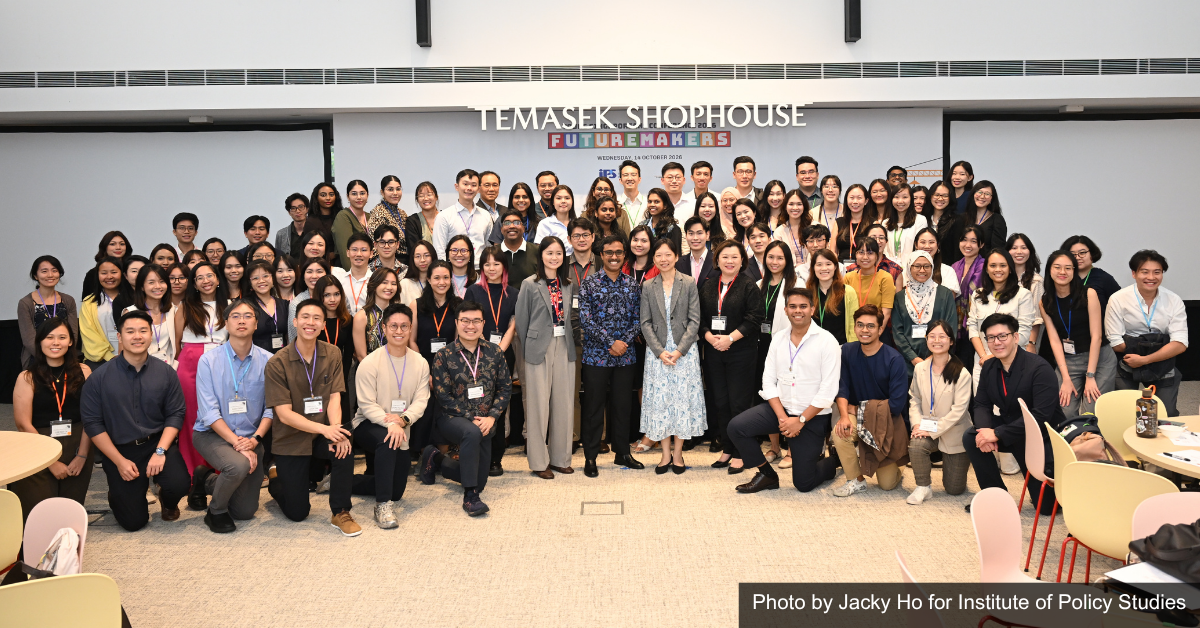
Day 2 of the Young Singaporeans Conference 2026 took place on 14 October, bringing together young Singaporeans to explore the challenges and policy considerations surrounding Singapore’s declining total fertility rate.
Held under the theme “Future Makers”, the day began with the panel “What’s Happening”, which examined young Singaporeans’ aspirations for marriage and parenthood, as well as the challenges they face. The second panel, “Solutions from the Ground”, explored how communities, employers and families can complement government policies and financial support.
In the afternoon, participants worked in groups co-led by Youth Leaders and IPS facilitators to refine policy briefs across five areas: relationships, housing, career, caregiving and parenting. They then presented their finalised proposals to Guest-of-Honour Ms Jasmin Lau, Acting Minister for Manpower and Senior Minister of State for Digital Development and Information.
During the dialogue and feedback session, Acting Minister Lau commended the participants for engaging thoughtfully with a deeply personal issue and for seeking practical solutions. She also shared her perspectives as both a policymaker and a parent.
Learn more about the Conference here.
Announcements
19th S R Nathan Fellow for the Study of Singapore — Mr Ng Chee Khern
We are pleased to announce the appointment of Mr Ng Chee Khern, Director and CEO of ISEAS — Yusof Ishak Institute, as the 19th S R Nathan Fellow for the Study of Singapore.
Mr Ng will be pursuing research into Singapore’s place amid great power rivalry, ASEAN’s capabilities and limits, and how Singapore can maintain sovereignty in the current geopolitical landscape.
His first lecture will take place on 16 November 2026.
Find out more in the press release here.
IPS Forum on Inclusion That Works: Evidence, Practice and Impact
The Institute of Policy Studies Programme on Race, Religion and Intergroup Cohesion (IPS RRIC) will be bringing together international and local academics and practitioners to share insights from programmes across Asia-Pacific in the IPS Forum on Inclusion That Works.
Across three panels, panellists will share insights from programmes across Asia-Pacific designed to reduce intergroup biases and discrimination in schools and in local communities, and how these interventions produce measurable impact and outcomes.
The Forum will be held online on 30 October 2026. Learn more the event and sign up here.
Recent Publications
Book — The Forty-Third Singapore Economic Roundtable
The Forty-Third Singapore Economic Roundtable, held on 18 November 2025, brought together some 70 economists, academics and business leaders from the public and private sectors.
The first segment examined Singapore’s macroeconomic outlook and its policy implications amid heightened global uncertainty, as trade tensions and shifting global monetary conditions continued to weigh on the economy.
The second segment was a special segment on the impact of artificial intelligence on the economy. Speakers from the industry, international business and technology sectors considered how AI is reshaping trade, markets and business activity, and what this means for Singapore’s economic prospects.
Articles

By Melvin Tay and Mathew Mathews
(The Straits Times)
• 6-min read
From 2027, most primary schools will reserve 60 Phase 2C places, and 12 schools will split their Phase 2C places based on home-school distance. The authors welcome the changes, drawing on IPS surveys that suggest perceived gaps between ‘prestigious’ and other schools lie more in competitiveness than educational quality. Schools can retain their distinctive traditions, while opening up as shared spaces where children from different social backgrounds can meet and learn together.
By Leonard Lim and Cheung Hoi Shan
(The Straits Times)
• 7-min read
Singapore parents increasingly value holistic development, an IPS Social Lab survey of 1,500 primary school parents finds. Yet, the education arms race is shifting. Tuition spending has more than doubled since 2016, and nearly 90% of parents report stress. The authors argue the real driver is a need for certainty in an AI-disrupted future, and that children are best served by parents more comfortable with uncertainty themselves.

By Mike Hou
(IPS Commons)
• 5-min read
Public belief in national service remains strong, but how servicemen experience NS matters just as much. Drawing on motivation science and IPS survey data, the author argues that compulsory institutions must earn commitment, not just compliance – through everyday leadership that shows servicemen respect, purpose and genuine concern for their well-being.
By Mike Hou
(The Straits Times)
• 7-min read
As Singapore marks 60 years of national service in 2027, commemoration should go beyond awards and recognition packages. This commentary proposes an NS60 Day of Service, where former unit mates volunteer together, and ‘return to camp’ visits that let NSmen show families where they served. Involving families and communities, he writes, would renew NS friendships and remind Singaporeans that service is sustained by participation, not obligation alone.

By Mathew Mathews
(The Straits Times)
• 7-min read
As generative AI reshapes rather than replaces jobs, workers need more than another course – they need to see a realistic path to their next role. The author argues that the new Skills and Workforce Development Agency, which brings together SkillsFuture Singapore and Workforce Singapore, will need to know whether the support people receive actually makes a lasting difference – something the five-year IPS-SWDA GROW study of 10,000 Singaporeans will help track.
By Justin Lee, Nicholas Thomas, Cecilia Kuek and Liang Kaixin
(The Straits Times)
• 7-min read
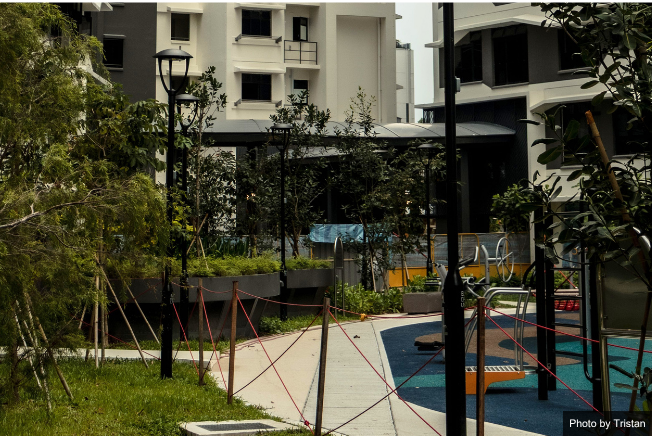
What happens when residents are handed a real budget and hard choices? In a participatory budgeting pilot by IPS Policy Lab with Tanjong Pagar Town Council, Spottiswoode Park residents were given $200,000 to weigh six proposals worth nearly $550,000. Drawing on experiences in Scotland, South Korea and Brazil, they argue that meaningful participation means accepting trade-offs and outcomes that go against you.
Recent Releases on the IPS website
By Justin Lee, Nicholas Thomas, Cecilia Kuek and Liang Kaixin
Singapore's population is ageing rapidly, and Singaporeans are living longer. Drawing on focus group discussions with 72 Singapore retirees and working adults, this working paper integrates activity patterns, expenditure data, and the motivations and trade-offs underlying retirees' lifestyle choices into a framework of sample retirement lifestyles. Besides spending power, family relational involvement emerged as a key dimension shaping retirement lifestyle in Singapore. These sample profiles can help Singaporeans better picture and plan for their own desired retirement lifestyle.
By Tan Poh Lin, Christopher Gee, Emily Ortega, Azriel Tay Xunkai, Ho Han Sheng, Daniel Tan
How much more would women in Singapore earn, if Singaporeans got paid for housework, caregiving and volunteering? This paper presents the first set of National Time Transfer Account estimates for Singapore, incorporating unpaid work such as housework, caregiving and volunteering to better understand how economic production varies by age and gender. These findings highlight the need for policies that support women and older adults in their substantial but often unrecognised care contributions.
By Mathew Mathews, Melvin Tay, Teo Kay Key
This paper analyses the findings of a survey of 1,500 Singapore Citizen/Permanent Resident parents of children in local primary schools. Compared to results from a 2016 survey, parents in Singapore are embracing a holistic approach to their children's education, but remain concerned about their children’s longer-term prospects. Parents continue to invest in tuition and enrichment, and rely on markers of academic school standing when making schooling decisions.
IPS in the News
Teh Tarik with Walid Episode with Dr Gillian Koh and Terence Ho
Gillian Koh and Terence Ho, two of the three editors of Lee Hsien Loong and Singapore, joined host Associate Professor Walid Jumblatt Bin Abdullah on his podcast. They discussed the book's central theme of adaptive governance, shifts in Singapore’s social support model, the thinking behind institutional reforms, and more. Watch the episode
here.
A recording of the book launch on 8 September 2026 can also be found
here.