In the Spotlight
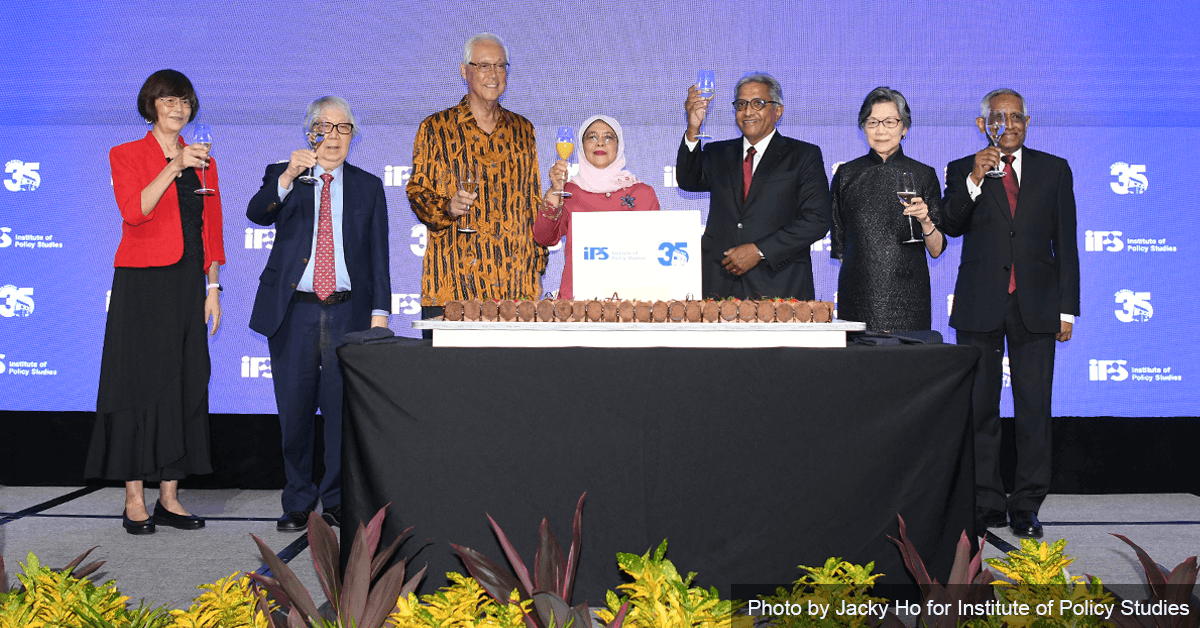
IPS’ 35th Anniversary Gala Dinner was held on 26 June 2023. Director Janadas Devan gave his welcome remarks where he spoke on the developments of IPS, including a growing Social Lab and Policy Lab.
Dinner was followed by President Halimah Yacob giving her speech. She addressed both the good and the complexities of multiculturalism, meritocracy and stewardship in Singapore, such as how existing structures must be examined to see how effective they still are in integrating new migrants.
Thereafter Madam President joined in a dialogue moderated by Mr Patrick Daniel, 11th S R Nathan Fellow and Director of SPH Media Trust. The dialogue discussed threats to multicultural cohesion, as well as her support for various social causes. Further, she touched on the importance of tracking emerging trends in AI, women in leadership as well as the livelihoods of low-wage and platform workers.
Professor Tommy Koh then led a toast to IPS alongside Mdm President, Emeritus Senior Minister Mr Goh Chok Tong, Director Janadas Devan and former IPS Directors Prof Chan Heng Chee, Dr Lee Tsao Yuan and Mr Arun Mahizhnan.
Articles

Commentary — Digital money needs to be bound to the real world
(The Business Times)
By Woo Jun Jie
• 5-min read
In the wake of various cryptocurrency crashes, governments have been exploring ways to regulate digital assets. IPS' Woo Jun Jie discusses how this can be done, such as binding digital assets to stable, real-world value using the concepts of purpose-bound or soulbound tokens.

Commentary — Why ASEAN should not falter in face of Myanmar junta's intransigence
(The Straits Times)
By Tommy Koh
• 6-min read
In this op-ed for The Straits Times, Prof Tommy Koh, Special Adviser to IPS, gives his take on the political situation in Myanmar, and what he hopes ASEAN leaders will discuss in the regional bloc's upcoming meetings. He concludes by highlighting the need for ASEAN to review its existing Myanmar policy, given the rise in violence and lack of humanitarian help in the country.

Commentary — Ridout Road saga: Thorough airing of issues shows premium placed on integrity
(The Straits Times)
By Gillian Koh
• 7-min read
In this piece for The Straits Times, IPS' Gillian Koh reflects on the developments surrounding the Ridout Road episode, as extensive discussions were held in Parliament regarding the issue.
She argues that with political and legal processes activated thoroughly, along with the openness in raising questions and discussions, it was an important exercise in democratic governance which we should encourage more of.

Commentary — What’s holding back migrant integration in Singapore and ways to break the barriers
(The Straits Times)
By Mathew Mathews
• 7-min read
In an op-ed for The Straits Times, IPS’ Mathew Mathews examines the integration of migrants in Singapore. While necessary for social cohesion, newer waves of migrants may not feel compelled to mix with the local population, and some socio-political conditions may not help the process.
This piece examines the formation of migrant enclaves, potential reasons why migrants decide to remain insular, and possible ways to enhance migrant-local relationships.

Commentary — Singapore Turf Club closure necessary, but no easy winner in the race for space
(The Straits Times)
By Woo Jun Jie
• 5-min read
In this piece for The Straits Times, IPS' Woo Jun Jie discusses the recent announcement that the Singapore Turf Club would cease operations. He writes that the specialised space built for horse racing is hard to convert for residential or commercial use. In addition, given the decreased interest in horse racing, as well as the lack of space in land-scarce Singapore, the piece argues that the club's closure is a necessary decision.
Recent Releases on the IPS Website
_150723.png?sfvrsn=fb07350a_0 "P_IPS Study on Public Attitudes towards National Service (NS)_150723")
IPS Study on Public Attitudes towards National Service
IPS researchers Dr Chew Han Ei, Mr Shane Pereira, Ms Pamela Lee, Ms Isabelle Tan and Ms Elizabeth Lim, recently conducted a study on public attitudes towards National Service (NS). The aim of the study was to better understand public sentiments on NS as an Institution and NS as Lived Experiences, so as to improve the NS experience. This was done through collating the results from a nationally representative survey on 1,002 Singapore Citizens and Permanent Residents (PRs), focus group discussions, and personal interviews, between July and November 2022.
Find out more about the findings of the study here.
Report on the 38th Singapore Economic Roundtable
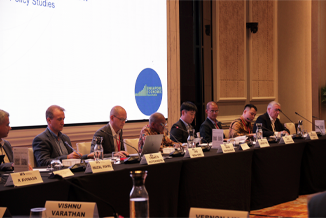
On 12 May 2023, the Institute of Policy Studies held its 38th Singapore Economic Roundtable. The biannual meeting comprised two segments. The first involved a panel discussion with economists and analysts from the public and private sectors on several topics such as the macro-economic outlook, China’s economic reopening, and the increasing geopolitical competition between the US and China. The second segment was a special session on the impact of the Anwar government on Singapore-Malaysia trade and diplomatic ties featuring key topic experts.

Reports on the Future-Ready Society Conference Series 2023: Launch of the Future-Ready Society Impact Fund
Tote Board, Lee Kuan Yew Centre for Innovative Cities (LKYCIC) and Institute of Policy Studies (IPS) launched the Future-Ready Society Impact Fund on 10 May 2023. This is a $6m fund to bring academic research and action-oriented solutioning together. The launch event included a dialogue between then-Senior Minister Tharman Shanmugaratnam and LKYCIC’s Professor Chan Heng Chee about Singapore’s future-readiness.
Dr Justin Lee, Senior Research Fellow and Head of IPS Policy Lab, Dr Harvey Neo, Senior Fellow, LKYCIC, and Ms Tan Su-Yin, Senior Director of Grants, Tote Board, also spoke at the event’s panel discussion. They shared about the fund, futures-oriented research, and how the community can participate in projects as well as in the Action Fellowships.
Read the report on the dialogue session here, and the panel discussion here.

Report on the Future-Ready Society Conference Series 2023: Panel Discussion on “The Future is Local?”
On 5 June 2023, the Institute of Policy Studies, the Lee Kuan Yew Centre for Innovative Cities and Tote Board held an online panel discussion titled "The Future is Local?" as part of the Future-Ready Society Conference Series. Two distinguished international speakers, Helena Norberg-Hodge and Michel Bauwens, discussed economic localisation and commons-based peer-to-peer production as a means of mitigating the problems caused by the global economic system. A local policymaker and academic weighed in on the significance of these ideas for Singapore.
Recent Publications

Working Series Paper — Digital Sovereignty: State Action and Implications for Singapore
Singapore must navigate an increasingly fragmented digital landscape as digital sovereignty gains momentum worldwide. More and more states, guided by differing motivations and understandings of digital sovereignty, are pursuing unilateral policies and initiatives to regulate the digital sphere.
This review by Dr Carol Soon, Ms Ann Mak and Dr Chew Han Ei as part of the NUS-CTIC Working Series, explores the challenges these developments pose to Singapore. It unpacks the key motivations and strategies states have undertaken to intervene in the digital sphere. This review recommends measures Singapore can adopt to safeguard its digital future while harnessing the benefits of the cyberspace.

Journal Article — Singapore: An Outlier? In How Asians View Democratic Legitimacy
This article by Dr Gillian Koh, Dr Teo Kay Key and Assoc Prof Tan Ern Ser in the Asian Barometer Survey consortium’s 20th Anniversary publication draws on its fifth survey conducted in 2020.
The article finds that higher education drives the preference for democracy; and younger Singaporeans with interest in politics are likely to support democracy for its procedural features. These will gradually make Singapore less of an outlier in the theorised association of successful capitalist development with the desire of citizens to exercise choice on who they wish to give their consent to organise society on their behalf, or the Modernisation Thesis.
Find out more about the publication here, or order a copy here. For more information, please contact Dr Gillian Koh (decb64_Z2lsbGlhbi5rb2hAbnVzLmVkdS5zZw==_decb64).

Book — Mobile communication and online falsehoods: Trends, impact and practice
As reliance on mobile devices for news seeking and information sharing continues to grow, the spread of online falsehoods on mobile instant messaging services (MIMS) has become a problem that confounds policymakers, academics and practitioners.
This book, edited by Principal Research Fellow Dr Carol Soon and published by Springer Nature, is a timely contribution that addresses the problems posed by online falsehoods in a large, technophilic region such as Asia. Drawing from what is being done in different Asian countries, it plugs existing gaps in research and practice in the management of online falsehoods on MIMS like WhatsApp, WeChat and Telegram.
Recent Events
Asia Journalism Fellowship 2023
The Asia Journalism Fellowship (AJF), a Temasek Foundation programme hosted by IPS, is a highly regarded mid-career programme for journalists around Asia.
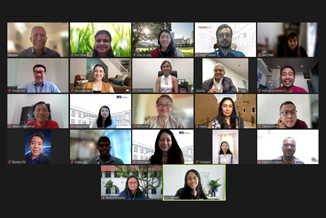
This year’s programme kicked off its first session on 10 July 2023, and welcomed 15 fellows. The session started off with an opening address by Mr Alan John, Director of AJF. Mr Gerald Yeo, Senior Director of Temasek Foundation, then spoke on the significance of AJF, as it was the first programme that brought Asian journalists together since 2009.
IPS Director Mr Janadas Devan also spoke on the network effect when more journalists are part of the Fellowship.
The programme will be conducted online for four weeks before the participants come to Singapore for four weeks.
Find out more about the Fellowship here.
IPS in the News
For media coverage of IPS experts' views on current affairs and IPS events, click here.
For upcoming IPS events, click here. Sign up for the IPS events mailing list here.
Careers at IPS — please check us out and help to spread the word!