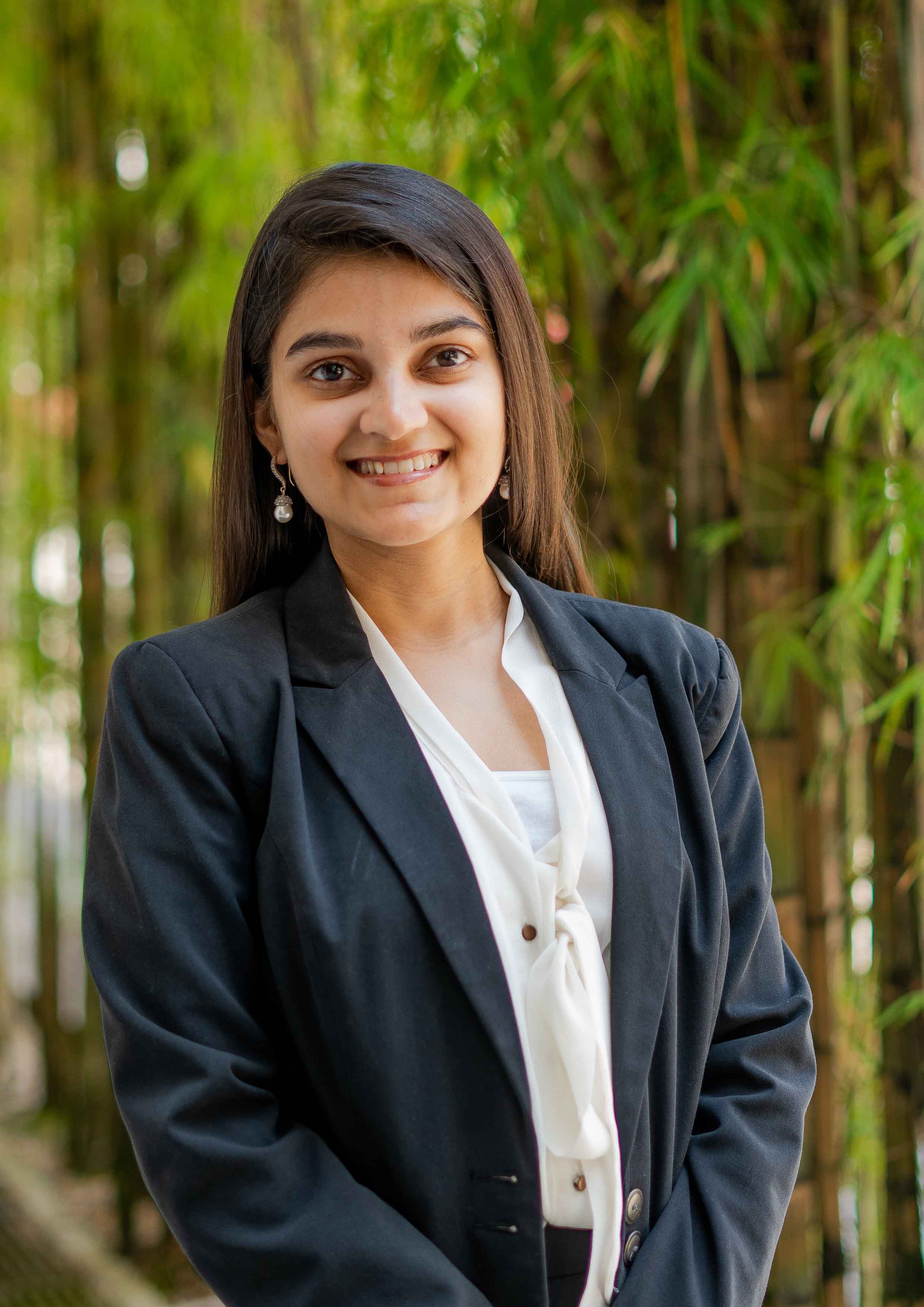
Dr Bhavya Gupta has been awarded the prestigious Wang Gungwu Medal and Prize for Best PhD Thesis in the Social Sciences and Humanities, in recognition of her groundbreaking research on central banks’ engagement with climate change and green finance. Presented annually to one outstanding graduate, this award celebrates exceptional scholarship and policy impact in the social sciences or humanities. Dr Gupta’s work stands out for its timely and policy-relevant focus on how financial regulation and central bank policies intersect with the global net-zero transition, addressing complex “policy puzzles” at the nexus of economics, climate, and political economy. Her achievement not only highlights the academic excellence fostered at NUS but also underscores the significance of interdisciplinary research in shaping impactful climate and financial policies worldwide.
We speak to her to learn more about her work and her passion in this.
What moved you to pursue this policy issue to PhD?
I began my PhD in 2019 with a keen interest in central banks and the global monetary and financial system. While these topics may appear rather arcane and technical, what interested me the most were the politics and policy aspects surrounding them. For instance, whereas macroeconomic theory would predict or explain things in a particular way, such as how central banks should evaluate the trade-offs between growth and inflation to set interest rates, in practice policy decisions are not always made with a formula in mind. Several variables influence that decision, and not all of them are grounded in theory.
My thesis advisor, Professor Ramkishen Rajan, was instrumental in helping narrow my focus within central banks on an emerging policy issue where there would be a lot more scope to make an original contribution. That was my primary motivation to delve deeper into central banks’ engagement with climate change and green finance. Once I started reading up on it, I realised this is a very promising space for research and analysis with multiple ‘policy puzzles’, and I haven’t stopped since!
Why are you passionate about this?
One of the key factors that drew me to a doctorate in public policy was the prospect of doing interdisciplinary work with a strong applied or policy focus. I’ve been very fortunate to get the opportunity to work on an area that is highly policy-relevant, timely, and has huge stakes attached in terms of facilitating (or impeding) the net-zero transition. Realising the significance and policy implications of my work and connecting it with the big picture across disciplines, be it finance or climate policy or political economy, has intensified my interest in this topic. It has also allowed me to expand my focus beyond central banks into newer and broader areas. This includes carbon markets and climate finance, both of which are incredibly vital for a successful low-carbon transition but need crucial policy support to align market incentives with climate objectives.
What impact do you hope to achieve in the policy world with regards to this?
Being on the other side of the PhD now, I very much look at it as the end of my beginning into the world of research. I’ve only started my intellectual journey and am very eager to learn more and contextualise my work into wider conversations, not just pertaining to climate policymaking but also about the role of markets and the political economy of central banking and financial regulation.
My current post-doc at the Climate Policy Hub in Oxford is a perfect example of the kind of work I wanted to do after the PhD which combines research with engagement and impact. At the Hub, we primarily focus on the ‘implementation gap’ – which is the gap between long-term climate pledges that countries made under the UNFCCC Paris Agreement and the policies they are implementing domestically to achieve these goals. In this role, I am able to contribute my focus on financial markets and prudential regulations into the mosaic of economy-wide climate mitigation policies. Our work on mapping and evaluating the quality of climate policies across countries, through the Climate Policy Monitor, serves as a valuable resource not just for policymakers, but also international organisations, non-profits, and researchers in comparing what ‘good’ looks like in climate policymaking across a variety of political economy structures and country contexts. And we actively engage with these stakeholders to translate our data into findings, engage in capacity-building, and explore the evolution of climate policies both across countries and within discrete domains.
Through my work at the Hub, I hope to be able to contribute a more granular assessment of the ‘implementation gap’ within climate policymaking and develop a systematic understanding of what “good” climate policies look like across domains such as transition planning, public procurement, carbon markets.