
In the Spotlight
.png?sfvrsn=e3e9070a_1)
On 13th October 2025, Mr Piyush Gupta, IPS’ 17th S R Nathan Fellow for the Study of Singapore delivered his first lecture titled “Balancing Stability, Trust and Innovation”.
This is the first lecture of his three-part lecture series titled “Singapore’s Financial Sector: How did we arrive, how do we thrive?”, as part of the IPS-Nathan Lecture series.
Mr Gupta discussed Singapore’s rise as a global financial hub and explained how policy choices, institutional design and public–private partnership underpinned growth across banking, capital markets, asset management, insurance and commodities.
The post-lecture Q&A session moderated by Ms Teo Swee Lian, Chairman, CapitaLand Integrated Commercial Trust Management Pte Ltd, further discussed what Mr Gupta would do if he became the new Minister for Finance or President and what the new generation of investors, who are more willing to invest in riskier products, can learn from past investors.
Learn more about his lecture series here.
Articles
 |  |
Commentary — Why ring-fence platform work for locals but not remote freelance work?
(The Straits Times)
By Clara Lee and Mathew Mathews
• 6-min read
Singapore’s approach to the freelance and platform economy balances protecting local fallback jobs with openness to global digital work. This commentary explains the two-track approach, and how investments in reskilling, career support and visible enforcement to help reassure workers that competition remains fair. | Commentary — Early-career continuity is a competitive advantage
(The Business Times)
By Chew Han Ei and Vincent Chua
• 6-min read
Singapore’s tight labour market hides a deeper challenge: many young graduates struggle to find stable early careers. Findings from the Youth STEPS study show that steady early employment boosts well-being and adaptability, making early career continuity key to productivity, retention, and giving every young worker a place to start and a future to build. |
 |  |
Commentary — Neighbour disputes: What more can we do for parties to come to the table?
(The Straits Times)
By Nicholas Thomas
• 7-min read
Neighbour disputes may seem minor, but can escalate if unresolved. This commentary discusses how stronger enforcement, faster mediation and deeper civic engagement can help bring neighbours to the table, but true neighbourliness cannot be legislated. | Commentary — Getting Vers right is crucial to preserving the Singaporean idea of home
(The Straits Times)
By Christopher Gee
• 5-min read
As more HDB flats near the end of their 99-year leases, a key challenge looms: renewing estates without weakening community bonds. This piece examines both the promises and pitfalls of the Voluntary Early Redevelopment Scheme (Vers). |
Recent Releases on IPS Website
|
Singapore Unpacked Episode 8 — Public Housing: a Home, an Investment, or a Retirement Plan? Headlines about million-dollar HDB flats have reignited debate over what public housing should mean for Singaporeans. In this episode, host Liang Kaixin speaks with IPS’ Christopher Gee and PropNex’s Ismail Gafoor on the balancing act between affordability for younger buyers and retirement security for older owners. The conversation also looks ahead to issues of lease decay, VERS, and how policies can sustain fairness and flexibility across generations. |
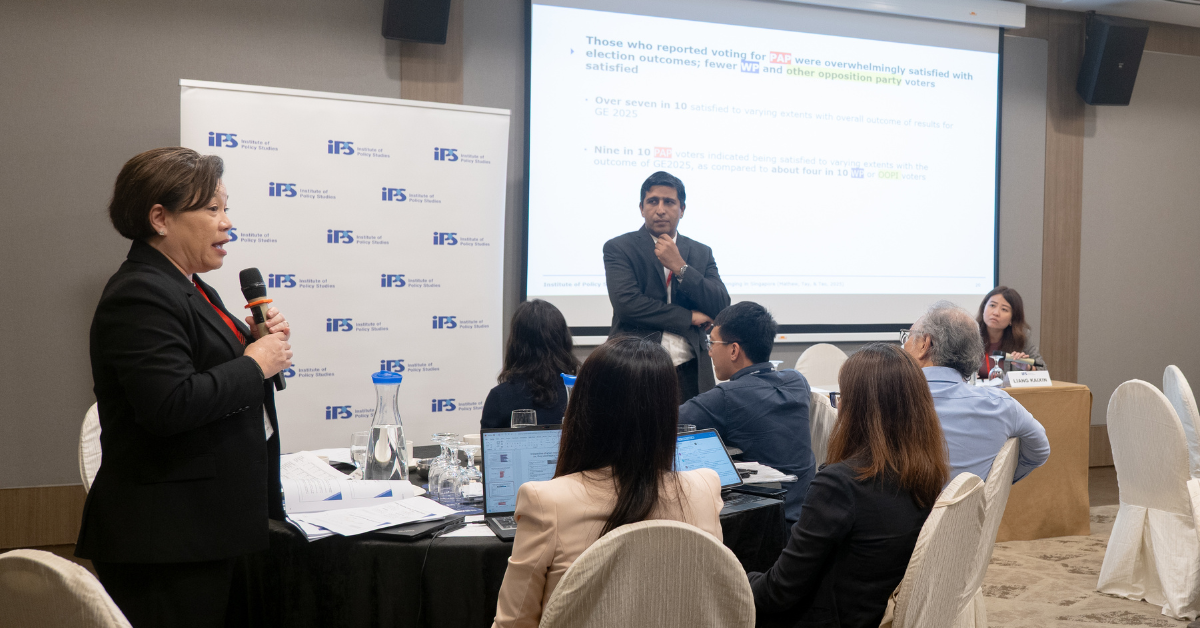 |
Report — IPS Closed-Door Discussion on Post-GE2025 Surveys On 1 September 2025, IPS convened a closed-door discussion on the findings of three surveys it conducted on voter attitudes and media engagement in relation to Singapore’s 3 May 2025 General Election. This report comprises summaries of the findings and points raised by domain experts. |
Recent Publications
Journal Article — Depth or diversity? Examining the longer run impacts of college curriculum breadth
 | University curricula often balance depth and breadth, but existing research shows this has little short-term impact on graduates’ earnings or employment.
Using a 2007 NUS policy change as a natural experiment, NUS’ Kelvin Seah and Jessica Pan, together with IPS’ Tan Poh Lin, find that while deeper specialisation yields no immediate disadvantage, it leads to slower earnings growth. Graduates with broader curricula, meanwhile, progress faster within firms, suggesting diverse skills boost adaptability and long-term income. |
Journal Article — Entangled Transitions: How COVID-19 Widened Well-Being Gaps Among Youth in Singapore (2017–2022)
.png?sfvrsn=2bea070a_1) | Using Youth STEPS data from 2017–2022, NUS’ Vincent Chua and IPS’ Chew Han Ei, Isabelle Tan and Pamela Lee find that COVID-19 widened well-being gaps among youth. Their study shows how unemployment and insecure work worsened well-being, while education and stable jobs offered protection—revealing how time, inequality and crisis became entangled in shaping young Singaporeans’ paths to adulthood. |
Announcements
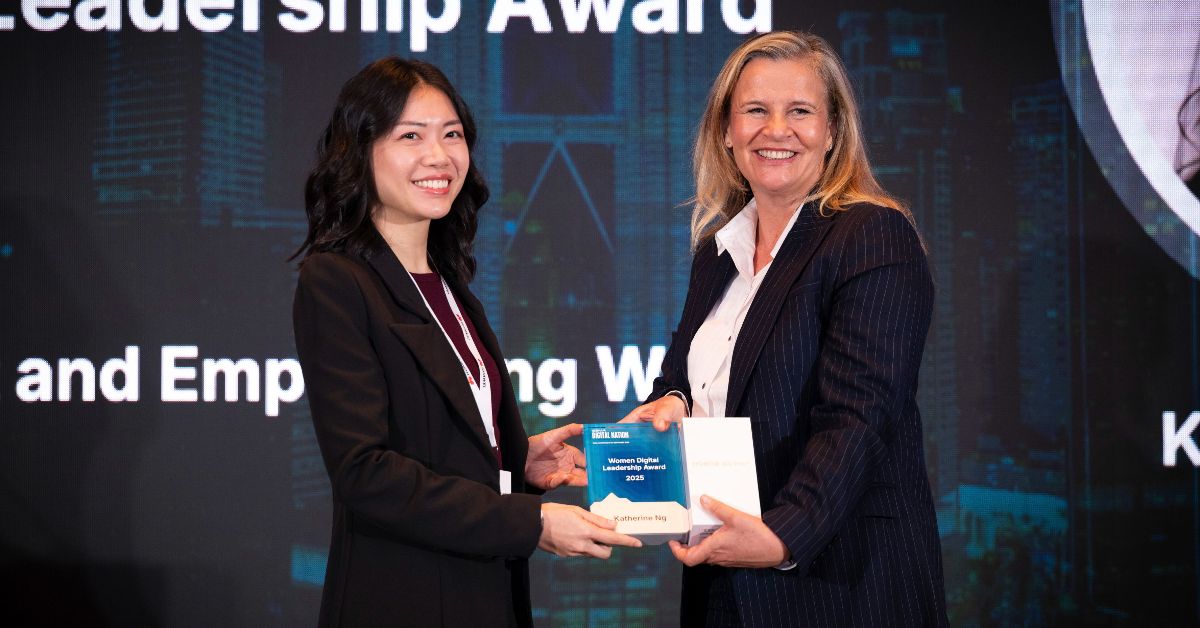 |
Katherine Ng Receives GSMA Women Digital Leadership Award for Advancing Inclusive Digital Transformation
Katherine Ng, Adjunct Research Fellow at IPS and Founder of Katashe Solutions, received the GSMA Women Digital Leadership Award at the Digital Nation Summit Kuala Lumpur in September 2025. The award recognises women leaders advancing inclusive digital transformation across APAC. Katherine was recognised for her work on technology governance and Katashe’s venture initiatives in AI, which focus on embedding citizen voices, building digital trust and fostering inclusive innovation in the region. |