Working at the intersection of finance and development has always been my dream. I was always on the lookout for opportunities where finance can be powerfully used to catalyse scale and innovation in development. One such space I was very keen about is impact finance where I had the opportunity to work during my summer break.
During my first-year summer break, I got an opportunity to work as a summer associate in Third Sector Capital Asia (now Tri Sector Associates), a non-profit in the field of impact finance. It works very closely with the US headquartered Third Sector Capital. Third Sector Capital is one of the global leaders in designing impact bonds and other pay-for-success structures. Founded in 2011, Third Sector Capital U.S. has successfully raised US$ 40 million in private funding and helped deploy government resources of over US$ 360 million. I applied for this role through the School’s career and internship portal.
Third Sector operates in the niche Pay-For-Success (PFS) space. Pay-For-Success is a mechanism where funding is tied to successful performance of the development intervention. Achievement of predetermined outcomes is an essential part of this funding model. This is a departure from traditional grant-based financing where funding is, often, linked to inputs and outputs. For example, in a traditional financing-based sanitation program, funding might be linked to the number of toilets constructed. But in PFS financing, funding is tied to outcomes like increase in toilet usage, reduction in open defecation (ODF), reduction in the incidence of disease or any such similar outcomes. This space is a part of broader themes such as development finance, impact finance and impact investing.
PFS takes two major forms: Social Impact Bonds (SIBs) and Development Impact Bonds (DIBs). Third Sector Capital designs and structures these financial and project arrangements.
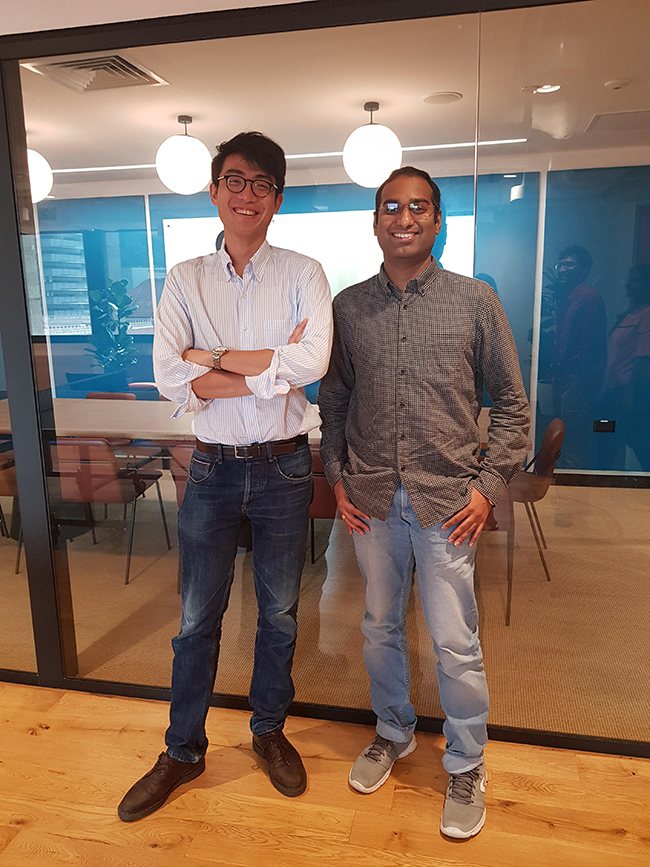
The Singapore office of Third Sector Capital was founded by Kevin Tan, a Harvard MPP graduate, with whom I worked directly. Kevin earlier worked with the Third Sector Capital team in the US before coming back to Singapore to start the Asia office.
In these two months, I worked on different projects. In the first project, I evaluated the non-profit sector in Singapore to study fundraising costs and trends. This is to understand if the social sector is raising money efficiently and effectively. PFS can help in reducing high fundraising costs for non-profits.
For my second project, I completed a preliminary design for a Development Impact Bond (DIB). This impact bond is for a soft-skills based intervention that aims to improve employment outcomes for youth studying in degree colleges and vocational institutes in India. Unemployment is a major challenge in India and the objective of this project is to help students become employment ready and secure good formal sector jobs. A preliminary design is the first step in the impact bond process. A design usually includes details of the intervention, beneficiaries, outcome metrics and a financial model to estimate capital outlay and rates of return.
In the third project, I designed a Social Impact Bond (SIB) for a mental health intervention in Singapore. Mental health is a pressing concern in Singapore. Poor mental health can have negative consequences for the individual, family, society and the economy. The objective of this project is to rehabilitate individuals with severe mental health issues back into society by providing holistic care and management.
I also participated in client meetings and saw first-hand how non-profits in Singapore and East-Asia operate.
In these two months I’ve learnt and realised how pay-for-success collaborations can unlock the potential of private and social sector collaboration. PFS also pushes stakeholders to use evidence and research to find out what works. This approach to social sector work and financing can promote innovation, rigour and drive stakeholders to collaborate closely with one another.
I was able to apply the knowledge and skills I learnt in the first year of my MPP. Little did I realise that they would be extremely relevant during my internship. The key part of designing PFS structures is to understand the theory of change of an intervention and deciding which outcomes should be measured and quantified.
I also represented Third Sector Asia at the 7th ASEAN Public Private Partnership (PPP) Forum on Rural Development and Poverty. I had the opportunity to co-lead a panel where I spoke about role of impact bonds in development, and the work Third Sector is doing in Asia.
Working in Third Sector Asia (Tri-Sector Associates) was a great experience in ways more than one. The organisation offered me several opportunities to take initiative, be creative and design mutually beneficial projects, a clear departure from work settings where one is often instructed on what and how of every task. My supervisor, Kevin, always insisted that I take up major responsibility for any of the projects I did. This allowed me to have perspectives from different parties and understand how the whole project takes shape.
I am deeply grateful to the Lee Kuan Yew School of Public Policy and Tri Sector Associates for giving me this opportunity to have a wonderful summer experience.
For anyone considering working in this sector, I would say that impact finance brings the best of both the worlds, the private and social sector. Recent trends indicate that more players are entering this space globally, including Asia, and this signals many opportunities to be a part of.
Given the sheer breadth and depth of work involved in these roles, a wide variety of skills and expertise can be honed. The obvious ones include designing project evaluation methods, financial modelling, evaluating non-profits to identify the best ones, structuring project interventions for maximum impact and collaborating with multiple partners like service providers, investors and funders to bring them together. This is an exciting, challenging and fulfilling space to be in.
-forum-on-rural-development-and-poverty.jpg?sfvrsn=b24f700a_2 "Panel-discussion-at-the-7th-ASEAN-Public-Private-Partnership-(PPP)-Forum-on-Rural-Development-and-Poverty")
-forum-on-rural-development-and-poverty.jpg?sfvrsn=464e700a_2 "Addressing-the-delegates-at-the-7th-ASEAN-Public-Private-Partnership-(PPP)-Forum-on-Rural-Development-and-Poverty")
-forum-on-rural-development-and-poverty.jpg?sfvrsn=ba4f700a_2 "At-the-7th-ASEAN-Public-Private-Partnership-(PPP)-Forum-on-Rural-Development-and-Poverty")