.png?sfvrsn=42b6050a_1)
In the Spotlight
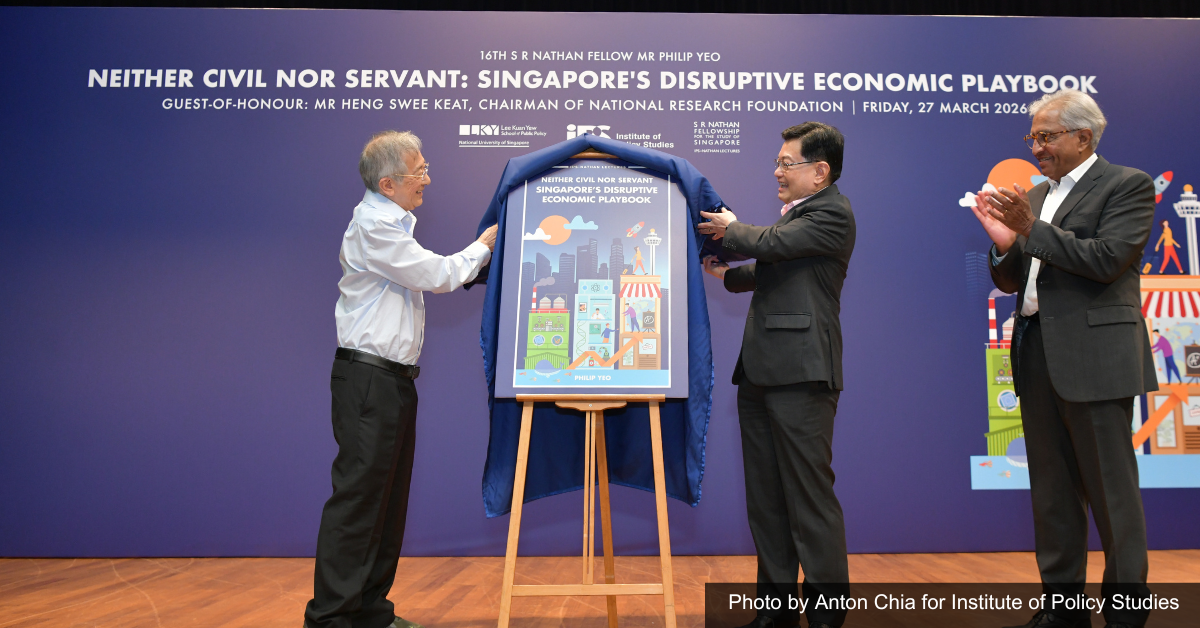
“Neither Civil Nor Servant: Singapore’s Disruptive Economic Playbook” by Mr Philip Yeo, IPS’ 16th S R Nathan Fellow for the Study of Singapore was launched on 27 March 2026. The book compiles three lectures delivered by Mr Yeo between March and June 2025, along with highlights of his Q&A sessions.
The launch was graced by Mr Heng Swee Keat, Chairman of the National Research Foundation. In his address, he praised Mr Yeo's "maverick" spirit combining vision with disciplined execution, highlighted his belief in investing deeply in people, and called on younger generations to be bold, unconventional, and relentless in their focus and execution. Following Mr Heng, Mr Yeo reflected on how Singapore made decisions, took risks, and adapted across different stages of development — tracing its journey from industrialisation to innovation.
Purchase the book
here. Enjoy 20% off with promo code WSIPS20.
Announcements
The Institute of Policy Studies Becomes University-Level Research Institute within the National University of Singapore
Effective 1 April 2026, IPS will no longer sit within the Lee Kuan Yew School of Public Policy (LKYSPP), where it has been a research centre since 2008.
It will operate as an autonomous research institute within NUS, while maintaining its longstanding mission to analyse public policy, bridge thought leaders, and communicate research to a wide audience. IPS is committed to expand and enrich the policy ecosystem in Singapore through research, engagements, and policy innovations and experimentations.
All existing IPS programmes, publications, and partnerships will continue. IPS staff and researchers will transition to the new structure with full continuity.
Recent Events
IPS Corporate Associates Lunch Dialogue on Budget 2026
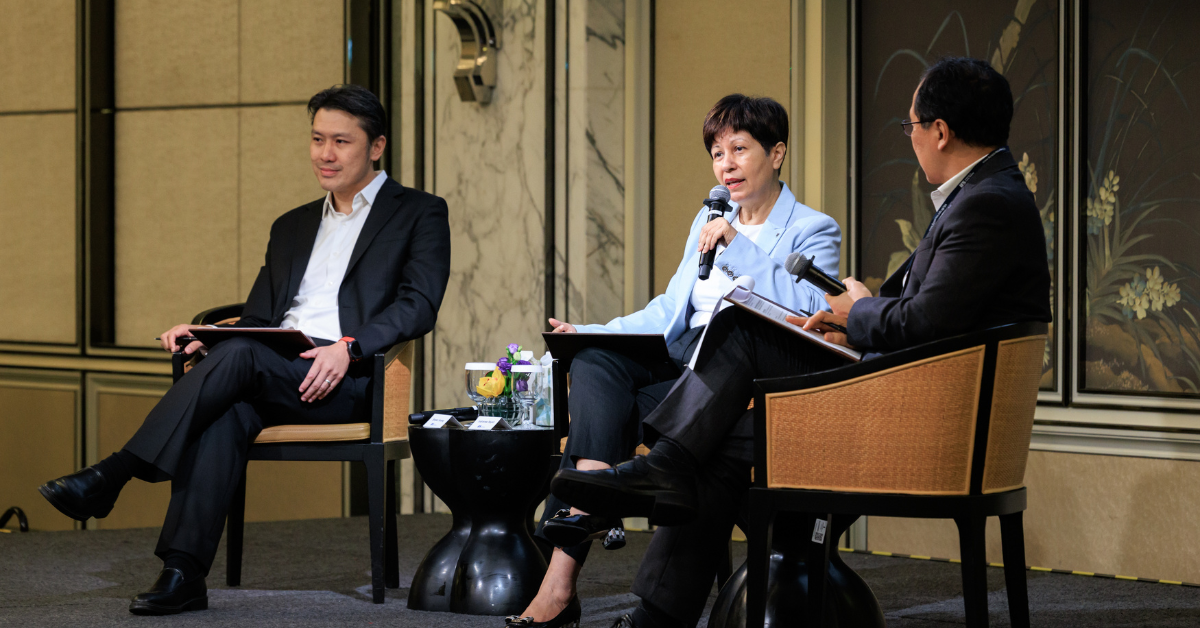
IPS held a Corporate Associates Lunch Dialogue on Budget 2026 with Minister Indranee Rajah and Senior Parliamentary Secretary Shawn Huang, moderated by IPS Deputy Director Christopher Gee.
The session explored the Budget's strategic priorities, including innovation, entrepreneurship, and leveraging AI as a competitive advantage. Discussions also covered AI regulation and responsible adoption, as well as how Singapore can navigate global disruptions to uncover growth opportunities while bolstering its security and defence.
Articles
Recent Publications
 |
Report — The Year in Review: Policy and Political Developments in 2025
By Casandra Ho Jing Jing
Singapore marked its 60th independence anniversary in 2025, with PM Lawrence Wong leading the PAP to a strengthened electoral victory. The year was dominated by US tariff shocks, cost-of-living pressures, and debates over housing and foreign manpower. Key political flashpoints included foreign interference allegations, Pritam Singh's conviction, and the gazetting of 38 Oxley Road. |
 |
IPS Working Papers No. 73 — Who Believes, Who Doubts, Who Participates? Citizen Engagement and Collective Action in Singapore
By Eddie Choo, Chew Han Ei and Christopher Gee
This paper examines why some Singaporeans participate in civic life while others don't — finding it's less about demographics and more about civic outlook. Surveying 2,000 residents, it identifies five distinct engagement profiles shaped by beliefs in collective action and diverse collaboration, suggesting participation strategies should be tailored accordingly. |
 |
Policy Brief — Citizen Engagement and Collective Action in Singapore - Key Findings and Implications for Public Engagement
By Eddie Choo, Chew Han Ei and Christopher Gee
This brief lays out design principles for efforts in encouraging participation in civic engagements. These include segmenting by outlook, matching formats to efficacy beliefs, diversifying beyond government led consultation, treat scepticism as selectiveness and use varied approaches to sustain legitimacy. |
 |
Feature — AI’s Real Inequality Risk: The Trust Divide in Southeast Asia
By Chew Han Ei
Southeast Asia’s AI boom risks creating a “trust divide”, with uneven confidence in digital systems across populations. Key trust dimensions and digital literacy determine who benefits from AI. Without addressing this gap, AI will deepen inequality rather than reduce it. |