Exploring Australia’s Governance System: An In-Depth Inter-Institutional Academic Exchange
From 1 to 8 December 2025, the Lee Kuan Yew School of Public Policy (LKYSPP) and the Australian National University (ANU) jointly organised the “Exploring Australia’s Governance System” academic exchange programme. Over eight days of inter-institutional collaboration, participants were provided with a platform for an in-depth understanding of Australia’s political, legal, and public governance practices.
Centred on the theme of “The Institutional Logic and Practical Landscape of Australia’s Governance System,” the programme unfolded in two phases. The first half, held at the Australian National University in Canberra, brought together professors and experts of considerable academic depth and international perspective. Through classroom lectures, roundtable discussions, and on-site visits to the national parliament, they systematically examined core topics including Australia’s federal structure, the functioning of state and local governments, the legal system, and financial regulation. It offered a rigorous analysis of the design logic and operational realities of its political institutions. In the second half, participants moved to Sydney, where site visits, industry research, and academic exchanges extended the programme’s scope to include international cooperation in public policy (such as engagement with China Mobile), international trade practices (including visits to the Sydney Fish Market and KPMG), and cross-border non-profit management (including an exchange with Bondi Surf Club). Academic interactions at the University of New South Wales (UNSW) and the University of Sydney further enriched the experience, realising a multi-dimensional integration of “institutional analysis—practical observation—international dialogue”.
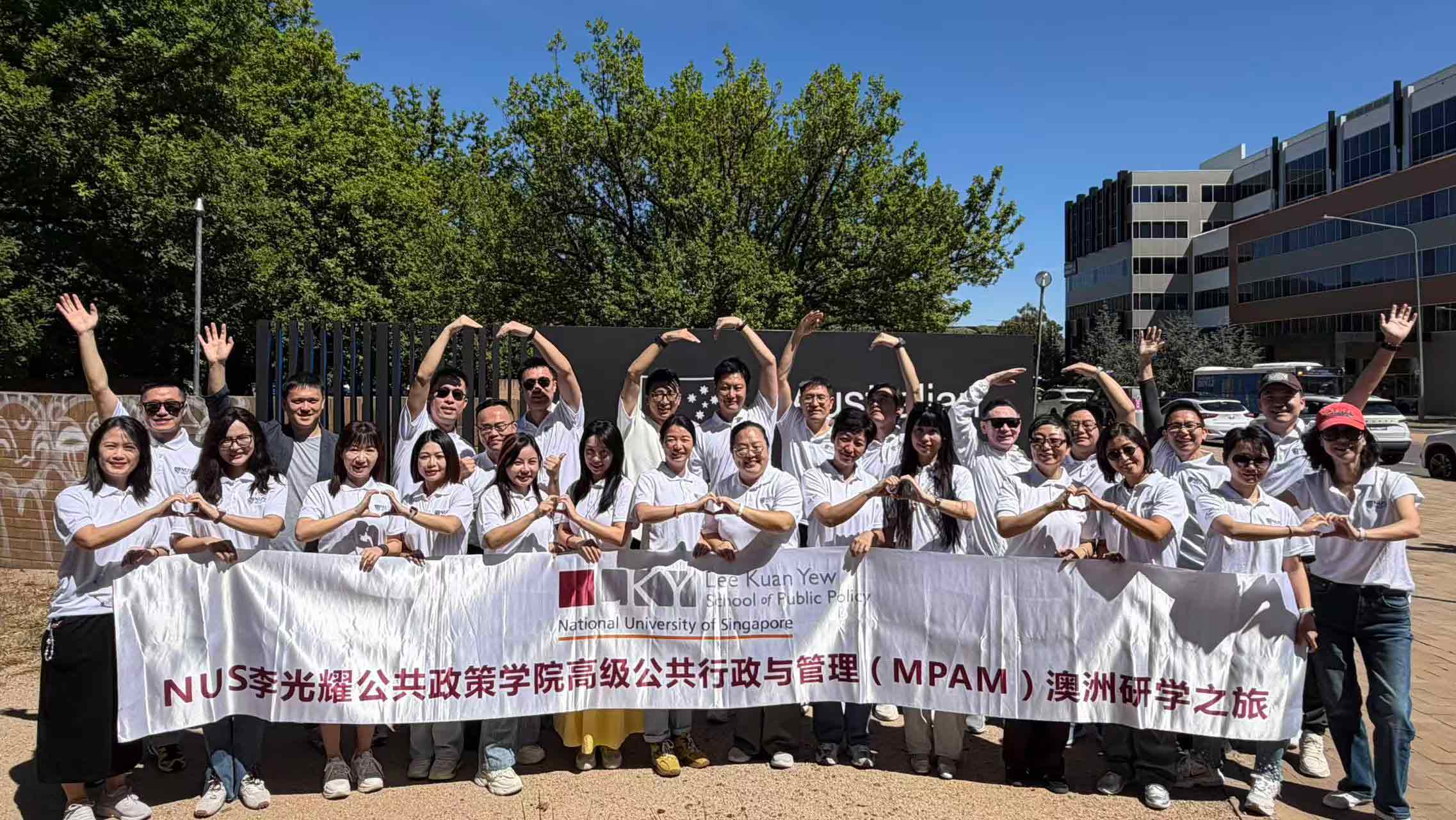
The smooth progress of this programme was made possible by the meticulous preparation and thoughtful arrangements of faculty from both institutions, whose solid academic grounding and vivid case studies helped participants build a theoretical framework for understanding Australia’s governance system. The LKYSPP team, through precise itinerary planning, seamlessly integrated academic discussion with experiential learning, ensuring both the depth of knowledge transfer and the richness of practical engagement.
For participants, this exchange was not only an expansion of academic horizons—from the distribution of power under federalism to policy practice at the local government level, from parliamentary oversight mechanisms to the real-world challenges of transnational governance. The multi-dimensional content brought institutional understanding from the “abstract” to the “concrete.” It also, through collaborative discussions and site-visit interactions, deepened cross-cultural academic connections and fostered friendships through the exchange of ideas.
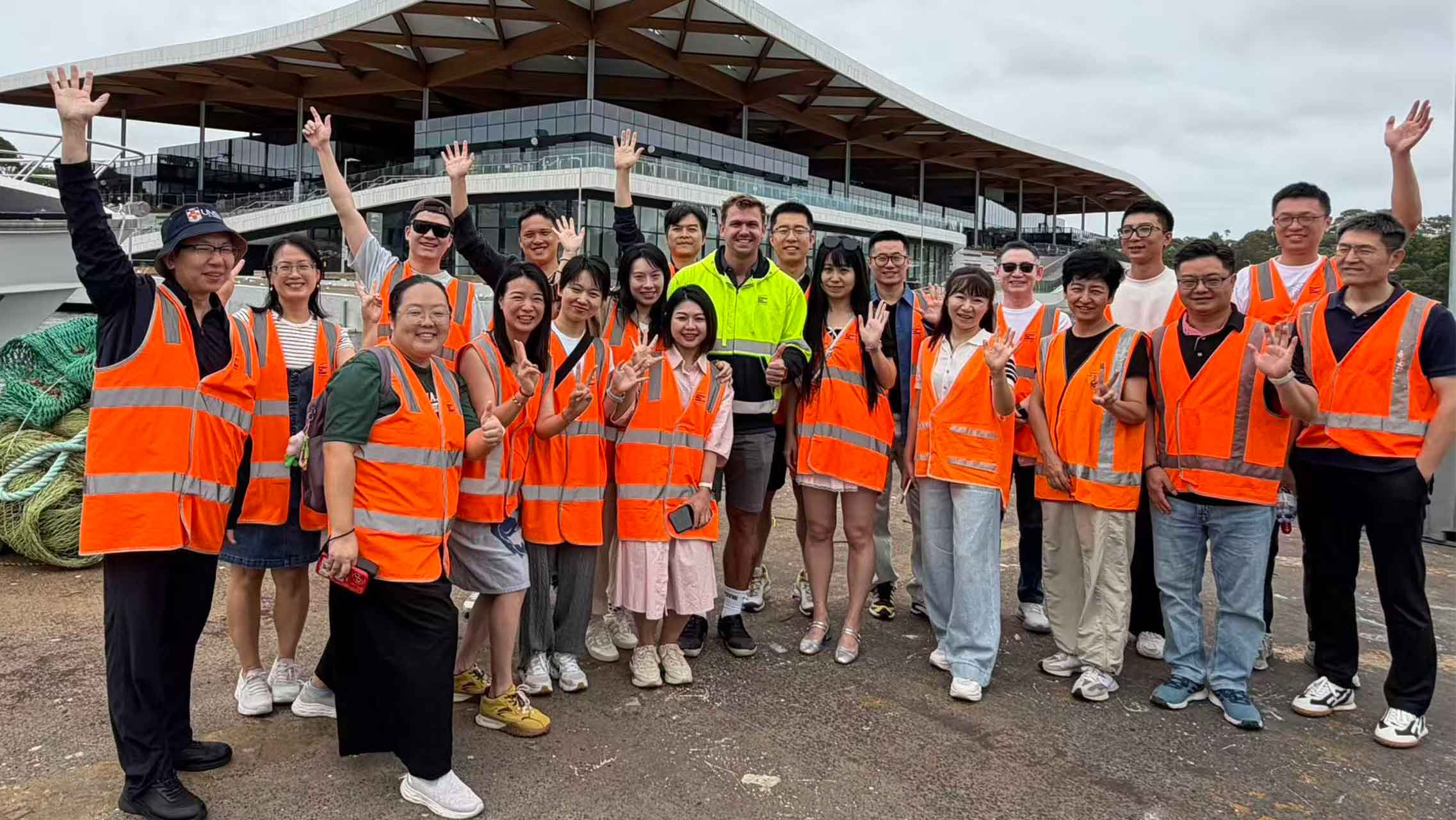
This carefully organised academic exchange, spanning institutions and nations, represents both a substantive dialogue on Australia’s governance experience and a valuable model for transnational learning in the field of public policy.
Testimonials
Although the nine-day study tour of Australia was brief, its packed schedule and richly varied content left participants immensely rewarded and eager for more.
Through on-site visits and in-depth exchanges with a range of institutions—including ANU, UNSW, local government bodies, the Australia China Business Council, Chinese-funded enterprises in Australia, and non-profit organisations—participants gained a systematic understanding of Australia’s political system and governmental structure, and its historical development. They also learned more about its current economic conditions, spanning areas such as agriculture, mining, environmental protection, taxation, and law. The programme combined academic rigour with practical insight, helping participants develop a comprehensive and multidimensional understanding of Australia from a variety of perspectives. Even for those who had visited before, this study tour offered far greater depth and insight than previous trips—more thorough and illuminating by far.
The trip also provided a rare opportunity for participants to interact fully, collaborate closely, and engage in meaningful exchange, further deepening mutual understanding and camaraderie.
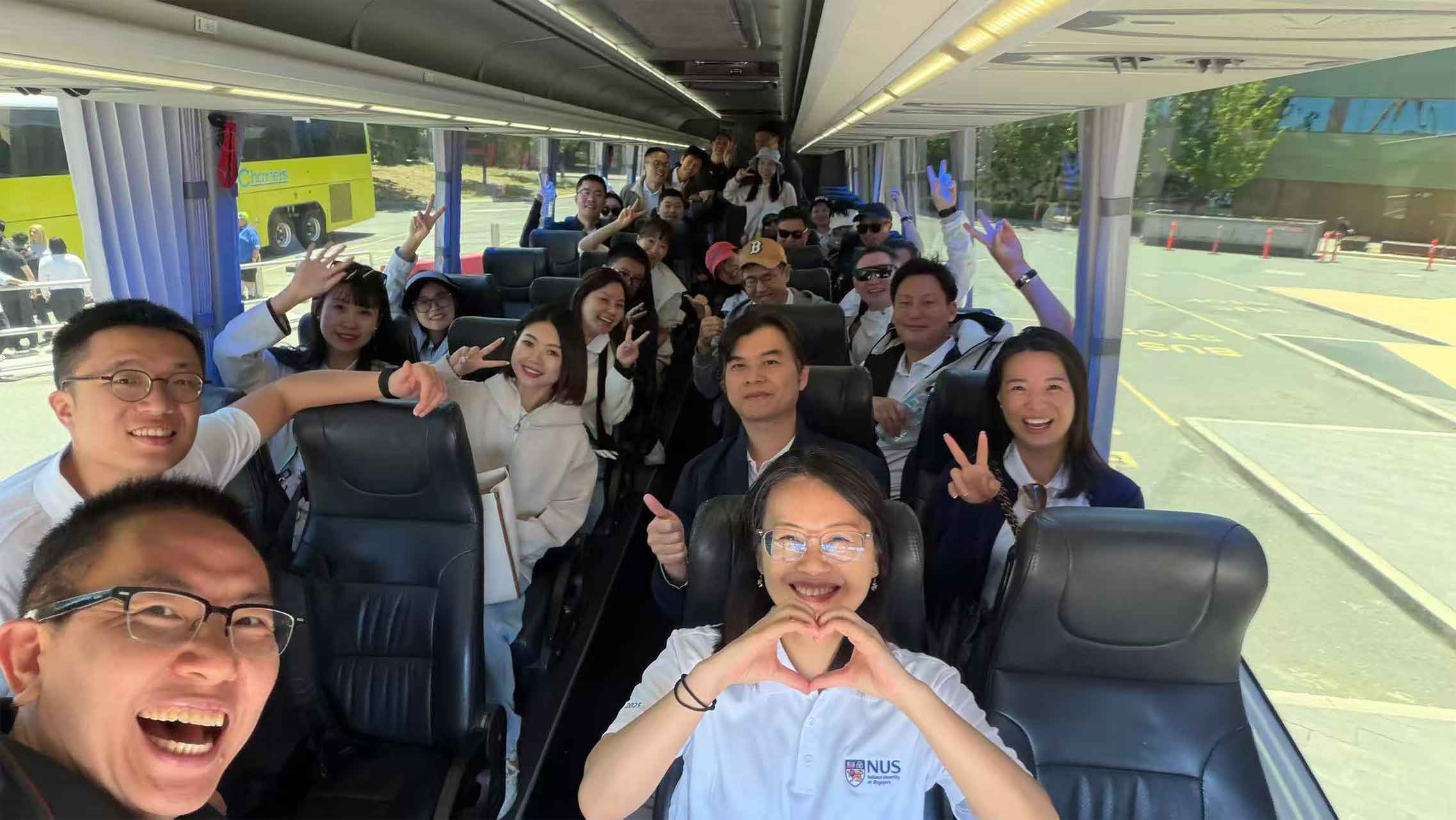
The entire programme was meticulously organised by the school, with every stop carefully and thoughtfully arranged. Teacher Zeren Li and Tricia, along with Professor Lu Fengming from ANU, worked tirelessly to coordinate every activity and logistical detail of each day. They also offered clear and accessible explanations of questions raised by participants, making for lively and engaging on-site teaching. We extend our most sincere gratitude for their guidance and quiet dedication.
— MPAM M16 Participant, Dong Mingshu
The school’s eight-day intensive Australia study programme, covering topics such as historical development, political and national governance systems, and economic development, energy, and security policies, left me with much to reflect on and a great deal to take away.
Although I have visited Australia many times over the past fifteen-plus years for work and leisure, this trip completely transformed my understanding of this continent-nation, particularly its governance model and economic and development strategies. Such strategies are inextricably linked to its historical evolution, demographic composition, and the constraints of its ways of thinking, making them a natural outcome of adapting to local conditions. To understand and learn from the public administration systems of different countries, one must dig deeply into the underlying considerations behind their policy decisions before one can selectively draw on and apply them to the context of one’s own country or institution.
— MPAM M16 Participant, Li Yunhua
This rich and joyful study tour of Australia has been an unforgettable milestone in my life.
From expert lectures to field visits, from macro-level policy to the everyday lives of ordinary people, the programme was packed with substance and insight. It brought the classroom into contact with reality, breathing life into knowledge from the textbooks and allowing participants to truly feel the meaning of learning. Throughout the journey, the teachers from ANU and NUS who looked after our programme arranged everything with great care and warmth. It was thanks to them that every stop was safe and well-organised, and that this study tour truly became a complete journey of “learning, travelling, and reflection.”
What moved me even more was the way friendships among classmates deepened rapidly over the course of this trip. Visiting together, learning together, discussing together, and supporting one another on foreign soil—the feeling of “returning to campus” and recapturing a sense of youth felt wonderfully real.
My heartfelt thanks go to the teachers who thoughtfully designed the programme and took care of us throughout; without you, we would never have had such a fulfilling and warm-hearted journey. And thank you to every classmate, it is because of you that this study tour has become our shared, beautiful memory. No matter where we go in the future, this journey and this friendship will always shine in our hearts, a true reflection of the best of our youth.
— MPAM M16 Participant, He Huan
This study tour of Australia gave me a more direct and intuitive understanding of the country’s political system, public governance, and the interactions between industry and society.
Whether in the classroom at ANU or during visits and exchanges at government agencies and enterprises, I gained a profound appreciation of how policies are collaboratively implemented across different stakeholders. The meticulous arrangements and dedicated efforts of the teachers throughout made our learning experience much smoother and rewarding. The bonds among classmates, forged through exchange, discussion, and shared experience, gave this journey even greater warmth and meaning. I am deeply grateful to have been part of this, and I look forward to putting what I’ve gained into practice in the future.
— MPAM M16 Participant, Yin Linna
The first week of December 2025, the close of one year and the prelude to Christmas, saw the MPAM16 cohort of the Lee Kuan Yew School of Public Policy at the National University of Singapore set off, under the guidance of our teachers, on the long-awaited journey to Australia.
A packed itinerary, intensive and fulfilling exchanges, and close-knit friendships made this journey overflow with the spirit of scholarship, the warmth of companionship, and the fruits of research.
From Canberra to Sydney, from ANU to UNSW and the University of Sydney; from policy and economics to history and the humanities; from laughter to heartfelt tears — we experienced a rich tapestry of places and people, listened to the insights of many distinguished voices, and felt the warm flow of the bond between teachers and students.
Here we saw Teacher Tricia’s meticulous planning and thoughtful arrangements, and her insistence on persevering through illness to attend to every detail of our food, accommodation, and daily needs. Here we witnessed Teacher Zeren Li’s tireless dedication in managing every aspect of each exchange session. And here, above all, we encountered Professor Lu Fengming’s outstanding professional spirit and the scholar’s charm of one who commands both the breadth of history and the depth of comparative thought.
As the plane lifted from the runway of Sydney Kingsford Smith Airport, I opened my notebook, its pages dense with notes, and found recorded between the ink-traced lines not only a sweeping survey of “Australia’s Political System and Australia-China Relations,” but also a leaf pressed from the botanical garden beside ANU in Canberra. And as Sydney Harbour gradually shrank to that small blue indent on the map, I realised that what I had gained from this trip was not merely a cross-national, cross-historical, cross-cultural fusion, but the lifelong ignition of a spirit of scholarly dedication by the example of my teachers.
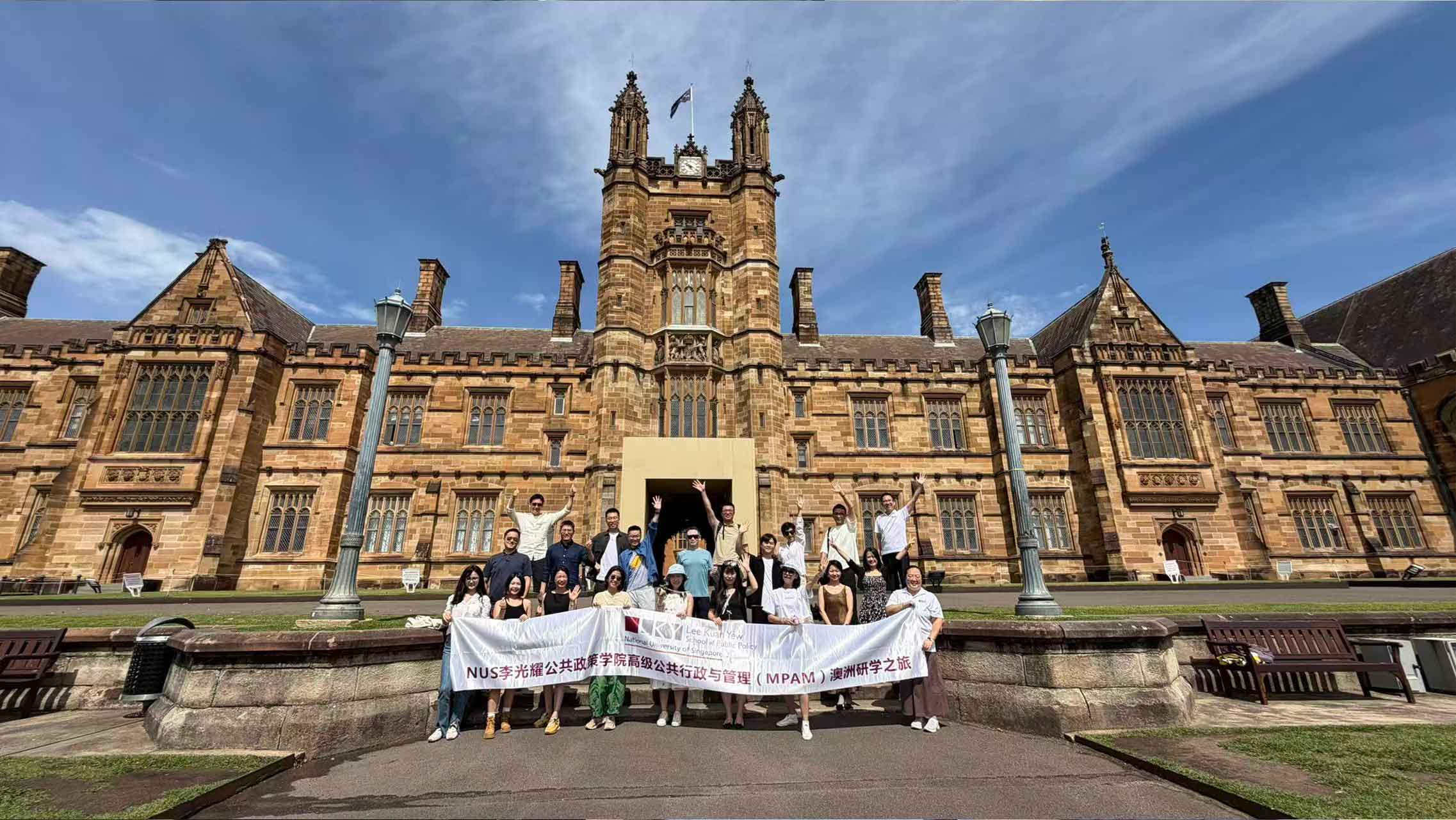
This study journey in the Southern Hemisphere has quietly become a map we have drawn together: the warp is the rigorous logic of our disciplines, the weft is the warmth of human connection, and the points where warp and weft meet are those quiet guides who have led the way.
Once again, my deepest thanks to all the teachers for their attentive and tireless dedication, and to all my classmates for their bold and wide-ranging perspectives. All of this, together, made this journey truly worthwhile and extraordinary. Allow me, here, to make a wish: may we always hold on to our love for this world; may we always continue to explore this world; and may we always look forward to more beautiful encounters yet to come. Until the next study tour—let us meet again.
— MPAM M16 Participant, Lou Chao