
NUS LKY

NUS LKY

AI and Digital Transformation for Public Policy Leaders

Special discount available! Enquire with our team!

10 Nov 2026 To 13 Nov 2026

(4 Days)

9:00 AM - 5:00 PM

(Singapore Time)

About The Programme

Leading AI and Digital Transformation

Artificial intelligence is no longer a technology question — it is a governance question. From automating citizen services and transforming healthcare delivery to reshaping national competitiveness and redefining the future of work, AI demands that public sector leaders move from spectators to shapers of outcomes. Yet most senior officials lack the strategic frameworks, technical literacy, and governance tools to lead this transformation confidently.

The AI and Digital Transformation for Public Policy Leaders Executive Program empowers public sector leaders to confidently navigate the evolving landscape of AI and digital innovation. By combining technology insights with policy and governance perspectives, the program helps leaders manage risks, support responsible adoption, and drive transformative outcomes for government, citizens, and society.

Through a combination of expert-led sessions, comparative country studies, hands-on workshops, engage with speakers from leading AI companies, and exclusive site visits to the latest AI innovations, you will develop a practical, context-specific AI governance playbook.

DOWNLOAD BROCHURE

Learning Outcomes

  • How to evaluate AI technologies and their applicability to public sector challenges
  • How to design an appropriate AI and Digital Transformation strategy by comparative best practices globally
  • How to examine risks and ethical considerations in implementing AI and digital transformation
  • How to measure the impact of AI-driven government programmes using meaningful KPIs and behavioural data

Target Audience

  • Mid- to senior-level government officials responsible for national or organisational digital transformation, AI strategy, or public sector innovation
  • Leaders of government technology agencies, digital offices, and data authorities
  • Senior executives in state-owned enterprises or public agencies exploring AI deployment across operations and industries
  • Anyone who seeks to gain strategic insights into AI and Digital Transformation for the public sector.

Programme Format

  • This in-person programme will consist of lectures, group activities, and panel discussions with faculty. 
  • Sessions will be held from 9 am to 5 pm (Singapore Time) on 10 to 13 November 2026
  • Attendance for all sessions is compulsory.
    • At the end of this short course, you will be conferred a Certificate of Completion.

    Hands-On Workshops & Site Visits

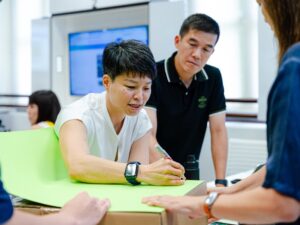
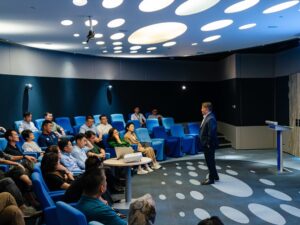
    Participants collaborating on a hands-on workshop exercise at LKYSPP    Programme participants during an exclusive industry site visit

    • Apply frameworks to real public-sector scenarios and translate learning into practical decisions.
    • Examine how governments around the world are approaching AI adoption, regulation, and digital transformation.
    • Go behind the scenes of the latest AI innovations and see responsible adoption in action.

    The programme covers strategic governance, ethical, and operational dimensions of AI in government, grounded in real-world case studies, expert-led discussions, workshops, and practical application:

    • Foundations: Core AI Concepts for Policymakers
    • AI and Digital Transformation Governance and Strategies
    • Policy Considerations: Ethical, Risks, and Mitigations
    • Evaluation and Impact Measurement of AI and Digital Transformation Strategies

    Enrol Now

    Application Deadline: 5 November 2026

    APPLY NOW

    Programme Fees

    S$6,800 + prevailing GST if applicable

    S$5,440 + prevailing GST if applicable (Early Bird Registration Fee till 9th October 2026 & for NUS and LKYSPP Alumni & LKYSPP Executive Education Past Participants)

    Group Registration Fee: For every 3 participants from the same organisation, the 4th participant attends for free.

    *Only one promotion can be applied, and EE will choose the higher of the three discounts (NUS and LKYSPP Alumni/LKYSPP Executive Education Past Participant or 4th person free).

    *Fee is inclusive of lunch, refreshments, and learning support materials.

    Executive Education Department
    Lee Kuan Yew School of Public Policy
    National University of Singapore
    469C Bukit Timah Road, Singapore 259772

    Email: lkysppoe@nus.edu.sg

    Our Faculty

    NUS LKY

    YAACOB BIN IBRAHIM, Professor of Practice, Lee Kuan Yew School of Public Policy

    Professor Yaacob Ibrahim is currently an Advisor, Office of the President, Singapore Institute of Technology (SIT), as well as Director, Community Leadership and Social Innovation Centre (CLASIC), SIT, where he oversees the University’s efforts in community-related projects and initiatives, and the nurturing of social advocate leaders who are grounded in research and community development. Prior to his current positions at SIT, Prof Yaacob served as a Minister in the Ministries of Communications and Information (2011 – 2018), Environment and Water Resources (2004 – 2011) and Community Development and Sports (2002 – 2004). Throughout the 16 years as a Minister, he was also Minister-in-charge of Muslim Affairs. Prof Yaacob started his political career as a Member of Parliament in Jalan Besar GRC on 2 January 1997, and held several political appointments before becoming a Minister in 2002. Prof Yaacob graduated from the University of Singapore with a degree in Civil Engineering in 1980. He worked as a structural engineer with a multinational engineering consulting firm from 1980 to 1984. He pursued his PhD at Stanford University from 1984 and graduated in 1989. He spent two years as a post-doctoral fellow at Cornell University. He joined the National University of Singapore (NUS) as a faculty member in 1990 where he became a tenured member. He took a leave of absence from NUS from July 1998 till his resignation from NUS in August 2018. Prof Yaacob sits on the board of several private companies and unions. He is Chairman of the Governing Board for the Earth Observatory of Singapore (EOS). He is on the Board of Trustees for the Building Construction and Timber Industries Employees’ Union (BATU), and is a Board Member of Surbana Jurong Group. He is also an independent director of Chip Eng Seng Corporation Limited. Prof Yaacob was most recently appointed non-executive independent director for Oceanus Group Limited on 1 September 2020. He also serves as Advisor, AI Singapore, a national Artificial Intelligence (AI) programme launched by the National Research Foundation to catalyse Singapore’s AI capabilities
    NUS LKY

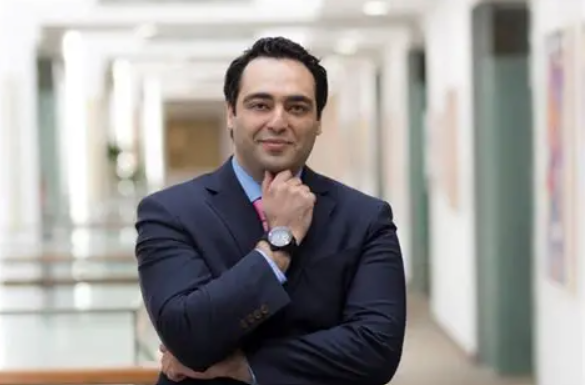
    ARAZ TAEIHAGH, Dean's Chair Associate Professor, Lee Kuan Yew School of Public Policy

    Araz Taeihagh is an Associate Professor of Public Policy at the Lee Kuan Yew School of Public Policy, Principal Investigator at the Centre for Trusted Internet and Community (CTIC), and a member of NUS Cities and the Centre for Computational Social Science and Humanities at the National University of Singapore. He served as Chair (2022–2023) and Co-Chair (2020–2022) of the PhD Programme in Public Policy. Taeihagh focuses on policy design and governance of emerging disruptive technologies. Taeihagh serves on the editorial boards of Technological Forecasting and Social Change, Transport Reviews, Policy and Society, Regulation & Governance, Humanities and Social Science Communications, Policy Design and Practice, Journal of Economic Policy Reform, Frontiers of Political Science, and AIMS Energy, among others. Taeihagh is the co-chair of the International Political Science Association Comparative Public Policy Research Committee (RC30) (2023–2025) a former elected member of the College of IPPA (2019–2023). Taeihagh is a member of the scientific committee (Governance) of AI Singapore (2023–2025, 2025–2027).

    NUS LKY

    EDUARDO ARARAL, Associate Professor, Lee Kuan Yew School of Public Policy

    Ed is both an academic and a practitioner with over 30 years-experience in academia and government. He holds a PhD Degree in Public Policy from Indiana University-Bloomington on a Fulbright PhD Scholarship with Elinor Ostrom (2009 Nobel Laureate in Economics) as his supervisor. At LKY School, he served as Vice Dean for Research and Assistant Dean for Academic Affairs (2009 - 2011). He helped set up the Nazarbayev University Graduate School of Public Policy in Kazakhstan and the Golkar Institute School of Government and Public Policy in Indonesia. He has extensively taught at the Academy for Developing Administrative Leaders in Saudi Arabia. He served in three editorial boards, is co-editor of the Cambridge University Press, Associate Editor at Oxford University Press, Editor (Special Content) of World Development and peer reviewer for many journals. He was Co-director of the Institute of Water Policy (2016-2022), Vice Chairman of the Asia Pacific Water Forum, Member of the Executive Committee of the International Public Policy Association and leads the AI, Digital Technologies and Public Policy at the LKY School.

    NUS LKY

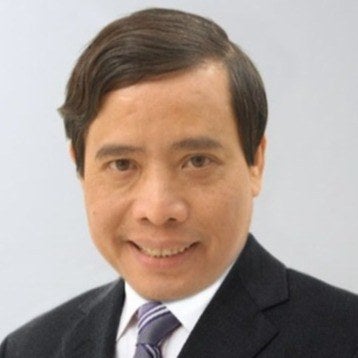
    VU MINH KHUONG, Professor of Practice, Lee Kuan Yew School of Public Policy

    Prof Vu Minh Khuong is a Practice Professor at the Lee Kuan Yew School of Public Policy (National University of Singapore). His research and teaching concentrate on economic development and policy analysis. Prof Vu has published three books and more than 50 papers in prestigious academic journals, including Technological Forecasting and Social Change, Information Economics and Policy, Journal of Policy Analysis and Management, Scandinavian Journal of Economics, Telematics and Informatics, Telecommunication Policy, Journal of Structural Change and Economic Dynamics, Energy Policy. He also frequently writes press articles for newspapers and other media, focusing on development policy issues. Professor Vu has received awards for research and teaching excellence at the Lee Kuan Yew School of Public Policy. Since 2021, he has been consistently recognized among the Top 2% of Scientists Worldwide for his significant academic impact, based on a study by Stanford University, and was ranked among the Top 1% in 2025.