NUS LKY

NUS LKY

Leading an AI-Powered Future

03 Aug 2026 To 07 Aug 2026

(5 Days Programme)

9:00 AM - 12:00 PM

(Singapore Time)

About The Programme

This programme is designed to prepare the next generation of leaders for a world shaped by Artificial Intelligence (AI). Through real-world case studies, collaborative challenges and scenario-driven project and presentation, participants will explore what AI can do, where it is being used and how it is transforming industries, communities and everyday life.

The programme focuses on empowering future innovators, leaders and changemakers. Participants will learn essential leadership skills for the AI era — critical thinking, ethical decision-making, creativity and responsible innovation.

What You Gain

💡 By the end of the programme, students will not only understand how AI is shaping the future but also feel empowered to lead the future it creates.


Upon completion of this programme, students will be able to:

  • articulate key AI concepts and trends shaping the next decade;
  • evaluate and utilise AI tools to enhance creativity and problem-solving;
  • analyse AI-enabled policy, ethics, and governance considerations; and
  • develop innovative solutions that use AI for positive social impact.

Who Is It For

Suitable for current undergraduate and postgraduate students who are curious about AI technology, innovations and the Future of Work (FoW).

Students should also have a good command of spoken and written English.

What to expect:

The programme comprises of 4 discussion driven workshops at 3 hours per module over 4 days.

The Evolution of Artificial Intelligence
The evolution of Artificial Intelligence (AI) traces humanity’s long-standing ambition to create machines that can think, learn and assist in decision-making. Initial progress focused on rule-based programs and symbolic reasoning, laying the foundation for modern AI research. As computing power increased, AI evolved from simple, hand-coded rules to systems capable of learning from data. In recent years, advances in big data, cloud computing, and deep learning have accelerated AI’s growth, leading to widespread applications in education, healthcare, transportation, creative industries and everyday digital tools.

Human-centered AI Innovation
Human-centered AI innovation goes beyond the applications of AI, which focuses on creating AI solutions that are grounded in real human needs and experiences. By applying the design thinking framework — empathise, define, ideate, prototype and test — this approach ensures that AI is developed not just for efficiency, but for meaningful and responsible impact. By integrating human-centered design with AI innovation, it empowers learners to create solutions that are inclusive, sustainable and trustworthy. It highlights the role of human judgment and leadership in shaping AI technologies that enhance lives, support communities and drive positive change.

AI and Public Policy
This module examines how AI is shaping public policy agendas and how governments can use AI to improve public services while safeguarding public interest values. Learners will gain insights on how public policy is developed, how evidence and stakeholders influence policy decisions, and how different policy instruments (regulation, standards, procurement, and public communication) can guide responsible AI adoption. Case discussions and group exercise will expose learners to the process making policy recommendations for AI-enabled initiatives.

AI Risks and Governance
This module focuses on the risks AI can pose—technical, ethical, legal, and societal—and the governance mechanisms used to manage them across the AI lifecycle (design, development, deployment, and monitoring). Learners will be introduced to practical frameworks for risk assessment and mitigation (e.g., transparency, human oversight, audits, and incident response) and explore how organisations and governments build trustworthy AI systems. Through group exercise, learners will incorporate risk, ethics, and governance into their policy recommendation for AI-enabled initiatives.

💡 We Make Sure You Internalise
The programme will culminate with small group presentations at the end of the programme on last session. Preparation and guidance activities will be scaffolded to ensure that students are well-prepared for their final presentation.


(Please note that LKYSPP EE is only in charge of this academic segment comprising workshops and assessment. Other activities are not organised and handled by LKYSPP EE.)

Enrol In This
Programme Now

Application Deadline: 27 Jul 2026

Programme Dates and Location

Date: 3 – 7 August 2026

Time: 9.00am – 12.00pm* (classroom sessions)

* Students should refer to the programme schedule provided upon admission for exact daily timing.  

Location: Lee Kuan Yew School of Public Policy
                      469C Bukit Timah Rd,
                      Singapore 25977

For programme enquiry, please email:

王忠汉 Henry (henry@readtheworld.com.cn) or
沈华光 Eason (eason@readtheworld.com.cn)

Our Instructors

NUS LKY

Dr. Guo Lei, Adjunct Assistant Professor, NUS Business School

Dr. Guo Lei is an Adjunct Assistant Professor with NUS Business School, with extensive experience in delivering practice-based learning programmes in data science and machine learning with successful results. Starting her career in Singapore as a practitioner, Dr. Guo worked across manufacturing, entertainment and education industries. With the aspiration of bridging the gap between research and practice, Dr. Guo pursued her PhD in the UK, where she worked on large-scale research projects with Cambridge University Service Alliance, BAE Systems and China Mobile. Dr. Guo returned to Singapore and joined NUS as a faculty member in 2011. She has particular experience in tackling complex challenges through applied research and education. She teaches executive programmes and postgraduate courses at NUS and NTU. She has a passion for engaging and inspiring working professionals at all levels by applying the theory to real world business applications. She was the Principal Investigator for a series of research projects by Land Transport Innovation Fund to inform better policy decisions. She advises corporate and government clients on digital transformation and adoption of emerging AI technologies in China, Singapore, Malaysia and Indonesia. Dr. Guo holds a PhD in Management from University of Exeter, and Master of Technology in Artificial Intelligence Systems from NUS.

NUS LKY

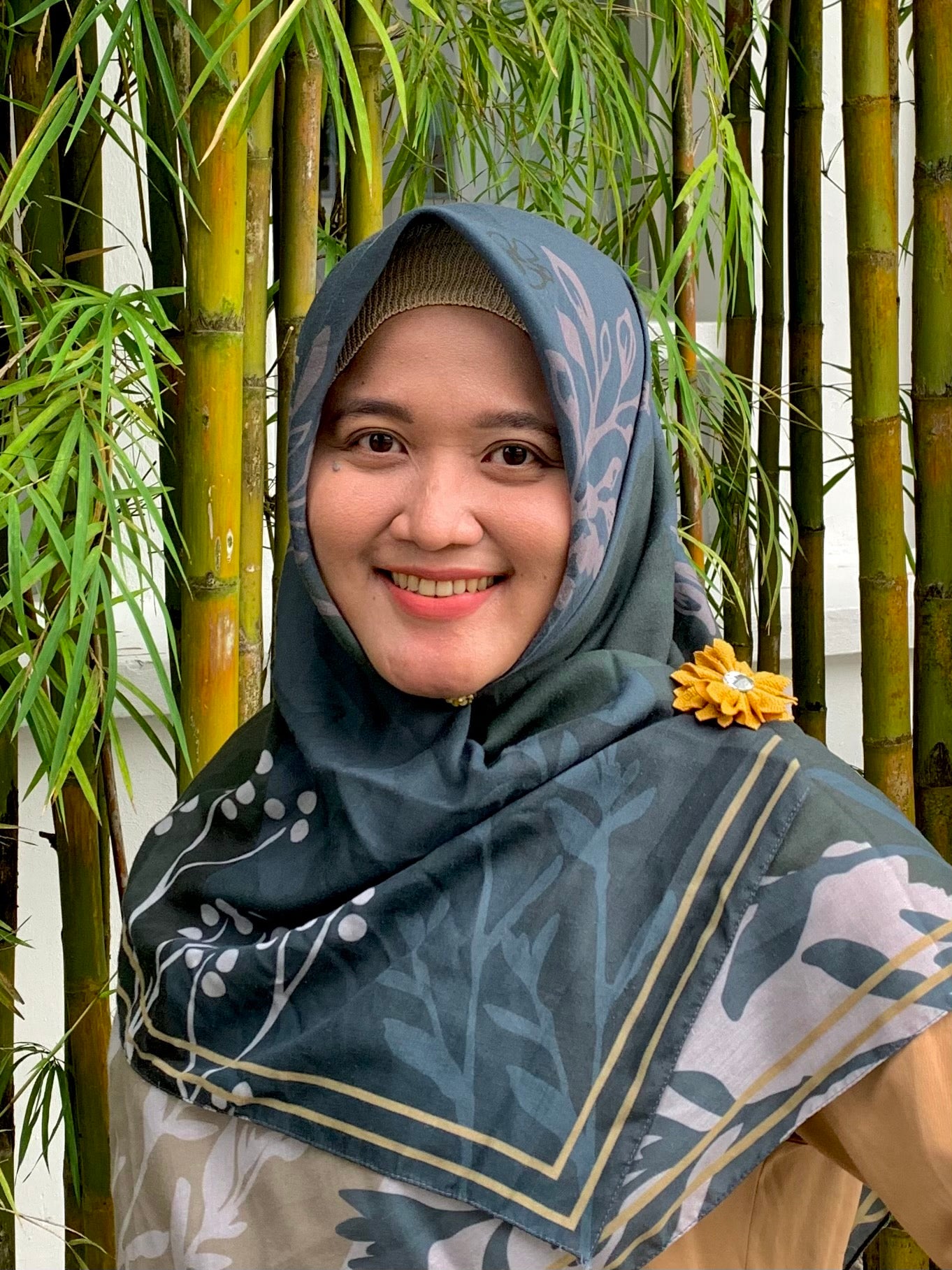
Dr. Anie Febriastati, Senior Associate Director, Lee Kuan Yew School of Public Policy

Dr. Anie Febriastati currently serves as Senior Associate Director (Executive Education) at the Lee Kuan Yew School of Public Policy. Her work focuses on developing capacity and capability development programmes for public and private organizations. She oversees the Singapore, Corporate, and Open Enrolment markets. Her interests and work experience have been on the intersection of futures thinking, strategic planning, public policy, as well as leadership and governance particularly in public sector. Dr. Anie brings extensive academic and management experience from her 20-year stint in the public and private institutions in Singapore and the region. She speaks, teaches and consults internationally on futures thinking, strategic planning and public policy. Dr. Anie holds a PhD in Policy and Leadership Studies from the National Institute of Education at Nanyang Technological University Singapore, Master of Education from University of Southern Queensland Australia, and Bachelor of Engineering (Mechanical and Production) from Nanyang Technological University Singapore.