NUS LKY

NUS LKY

Youth Leadership and Innovation

09 Feb 2026 To 13 Feb 2026

(5 Days Programme, Multiple Intakes Available)

9:00 AM - 12:00 PM

(Singapore Time)

About The Programme

In today’s world, organisations and projects increasingly need more of the combination of deep technical expertise, highly functional interpersonal abilities and excellence in leadership for top performance. It is necessary to foster a culture that drives change, a global vision of projects and the capacity to inspire and motivate teams to continuously reinforce this environment of constant innovation.

This youth leadership and innovation programme combines the development of leadership and communication skills with the vision needed to address the innovation process within business and project management.  In this compact and dynamic programme, students will learn to lead from self-knowledge and creativity and enhance their ability to build teams with a culture of innovation.

What You Gain

💡 Through this programme, students will be able to acquire tools to cultivate personal fulfillment as a leader, attain a refreshed sense of visionary thinking that will enhance their understanding of environmental sustainability and international business, and learn tactics for building productive, supportive professional relationships and networks.

Who is it For

Students in Grade 10 – Grade 12 with keen interest to explore and learn beyond school curriculum.

Students should also have a good command of spoken and written English.

What to expect:

The programme comprises 4 discussion driven workshops: 

Leadership in Environmental Sustainability
This session will equip students with foundational skills and knowledge required to become a successful sustainability leader, capable of identifying and tackling environmental challenges through effective and innovative policies and strategies.

Effective Communication and Presentation
Students will be provided with the mental tools and frameworks to express themselves clearly and succinctly, practice engaging people with greater flair and confidence, and present / tell stories in a more convincing and persuasive manner.

International Business
The world’s economy is becoming increasingly global and one who understand the international context of business will have a competitive edge over their peers.  This module will introduce the world of international business and investigate the dynamic interactions between organisational strategies, economic policies and the evolving strategic environment.

Leading for Innovation and Change
To succeed in leading and transforming organisations into more “green” and internationalise, future leaders need to create psychologically safe climate and culture for innovation and change. Students will learn how to the create climate and micro cultures through interesting activities in this session.

💡 We Make Sure You Internalise
The programme will culminate with small group presentations at the end of the programme on last session. Preparation and guidance activities will be scaffolded to ensure that students are well-prepared for their final presentation.


(Please note that LKYSPP EE is only in charge of this academic segment comprising workshops and assessment. Other activities are not organised and handled by LKYSPP EE.)

Programme Dates and Location

Dates:
Intake 13   9 – 13 February 2026
Intake 14   21 – 25 February 2026

Time: 9.00am – 12.00pm* (classroom sessions)

* Students should refer to the programme schedule provided upon admission for exact daily timing.  

Location: Lee Kuan Yew School of Public Policy
                      469C Bukit Timah Rd,
                      Singapore 25977

For programme enquiry, please email:

陈浩 Hacent (hacent.chen@lookerchina.com)

Our Instructors

NUS LKY

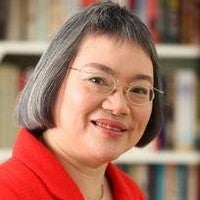
Dr. Caroline Brassard, Adjunct Assistant Professor (Executive Education), Lee Kuan Yew School of Public Policy

Dr. Caroline Brassard has been teaching at the Lee Kuan Yew School of Public Policy since 2002, on topics such as development economics, econometrics, research methods, and policy analysis. She has also been an academic adviser at the Centre for Peace and Justice, BRAC University, Dhaka, Bangladesh since 2017. Her current research focuses on the risks, mitigation measures and impacts of COVID-19 on vulnerable groups in Singapore and Bangladesh. She also researches on poverty alleviation policies in urbanising Asia. Caroline co-edited a book on Urban Spaces and Gender in Asia: Perspectives on Social and Economic Inclusion (with Divya U. Joshi, by Springer 2020). Her earlier books include “Natural Disaster Management in the Asia-Pacific: Policy and Governance” (co-edited edited with David Giles and Arn Howitt) by Springer in 2015. Prior to joining the Lee Kuan Yew School of Public Policy, Dr. Brassard worked in Madagascar for UNICEF, in Bangladesh for CARE and in Vietnam for her post-graduate research. She holds a PhD in Economics from the University of London.

NUS LKY

Dr. Ba Yuhao, Assistant Professor, Lee Kuan Yew School of Public Policy

Dr. Ba Yuhao is an Assistant Professor in the Lee Kuan Yew School of Public Policy at the National University of Singapore. His research interests are around (1) non-state involvement and leadership in environmental governance systems, with a particular focus on corporate entities; (2) interactions between governance systems and the policy process; and (3) governance outcomes and performance in the context of environment and sustainability. As an Association for Public Policy Analysis and Management’s Equity and Inclusion Fellow, Dr. Ba is also committed to promoting equity, inclusion, and diversity in the world of public policy and management.

NUS LKY

Dr. Sasidaran Gopalan, Senior Lecturer, Lee Kuan Yew School of Public Policy

Dr. Sasidaran Gopalan is a Senior Lecturer in Economics at the Lee Kuan Yew School of Public Policy. Prior to this, he was an Assistant Professor of Economics in the College of Business and Economics at the United Arab Emirates University (UAEU) based in Abu Dhabi. In the past, he has held various research appointments across several universities in Asia including Hong Kong University of Science and Technology (Hong Kong), Nanyang Technological University (Singapore) and NUS. He has also taught at the Graduate School of Public Policy at Nazarbayev University (Kazakhstan). His teaching interests span the broad areas of macroeconomics for policy, money and banking, empirical methods for public policy, international economic policy and international political economy with a significant applied policy emphasis. Dr. Sasi's research focus is closely aligned with his teaching interests. His research assumes a strong interdisciplinary orientation and lies at the intersection of applied macroeconomics, international economics and development policy with a broad focus on emerging markets. Specific topics include foreign direct investment, financial globalisation, financial inclusion and trade and global value chains. He has published in notable field journals such as World Development, the World Economy, Climate Policy, and Journal of Macroeconomics, co-written books as well as contributed to several policy briefs and op-eds for leading global financial dailies.

NUS LKY

Mr. Jack Huang, Associate Director, KPMG Business School

Mr Jack Huang is a Fulbright alumni and bilingual public policy / corporate strategy / project management specialist with close to 20 years of international experience managing highly complex, multi-stakeholder projects across the public, private and not-for-profit sectors. His primary fields of expertise are sustainable development, urban planning, built environment regulation and climate change adaptation. As the former Deputy Director (Infrastructure) in the Ministry of National Development, he led his team to publish Singapore’s Climate Adaptation Plan, developed the national Coastal Protection Framework, and supported the crafting of Singapore’s contribution to the SDGs. From October 2019 to 2022, Jack was the General Manager (Strategic Planning) for the Sino-Singapore Tianjin Eco-City Investment and Development (SSTEC) joint venture company, the master developer for a collaborative, sustainable urban development project in northern China between the Singapore and Chinese governments. He is currently based in Singapore as an ESSEC-Mannheim Executive MBA candidate and adjunct consultant / executive trainer for Fortune 500 companies. He is passionate about executive education, high-level group process facilitation and youth mentoring, and his past achievements in these areas include designing a 6-month change champions programme for youth at risk under the Singapore Indian Association, and a structured mentoring programme under the US Embassy to groom young leaders.

NUS LKY

Ms. Eliza Quek, Director, Terrific Mentors International

An international, cross culturally sensitive organisation and HR consultant who thrives on learning, adding value in transforming the way individuals, teams and organisations think and view challenges. Eliza brings with her a wealth of Transformational Leadership experience in both private (MNCs, SMEs) and the public sector (Public Service Reform to enable Malta to enter the European Union; evolving People Centered Management culture in Singapore’s Vocational Industrial Training Board; strategic thinking and diversity management, Myanmar government; enabling Ethiopian Airlines to compete effectively within Africa). Her work in Healthcare (Abbvie, Alcon, Amgen, C-Suite Fortis Healthcare, GSK, Integrated Health Information Systems; Johnson Matthey, Novartis, Roche Group and Roche Diagnostics, Sanofi-Aventis, SingHealth involved facilitating articulation of Leadership Brand, enhancing executive presence, connecting with impact (AT Kearney) and agility to thrive in a VUCA and digitalised world. Eliza is also on the Barclays Global Faculty and clients in the financial industry include Allianz Asia Pacific, Allianz Indonesia, American Express, Asian Development Bank. Eliza has coached C-suite members in stakeholder management, strategic networking and partnering skills; systems thinking; influencing and negotiation; cultural fluency, learning agility, change management and communications; strategic planning and team building and paradox management.